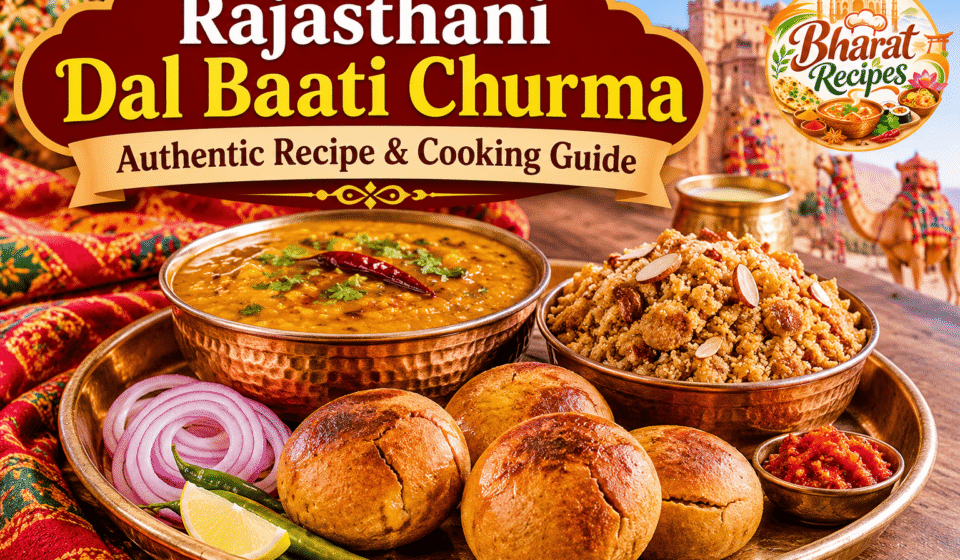
Rajasthani Dal Baati Churma Recipe – Authentic Traditional Style
Rajasthani Dal Baati Churma Recipe: Authentic Ingredients, Preparation and Cooking Method
Indian cuisine offers a wonderful variety of traditional dishes, each with its own history, taste, and cooking style. Among these, Rajasthani Dal Baati Churma is one of the most famous and loved dishes from Rajasthan. Known for its rich taste, crispy baati, flavourful dal, and sweet churma, this traditional meal represents the food culture of Rajasthan.
Dal Baati Churma is a complete meal made using three different preparations. Dal is a mixture of lentils cooked with spices and a traditional tempering. Baati consists of round wheat flour balls that are baked or roasted until they develop a crisp outer layer. Churma is a sweet preparation made by crushing cooked baati and mixing it with ghee, sugar, and dry fruits.
The combination of these three elements creates a beautiful balance of flavours. The spicy and savoury dal goes perfectly with the crispy baati, while the sweet churma completes the meal. Traditionally, baati is dipped in ghee before serving, which gives it a rich taste and softens its texture.
This dish has its roots in the desert region of Rajasthan, where people developed cooking methods using simple ingredients that could be stored and prepared easily. Over time, Dal Baati Churma became a popular part of royal feasts, family gatherings, weddings, and festivals.
Today, it is served in restaurants across India and is especially popular among people who enjoy traditional Indian food. For chefs and home cooks, learning this recipe is a great way to prepare an authentic Rajasthani meal using easily available ingredients.

What Makes Rajasthani Dal Baati Churma Special?
The uniqueness of Dal Baati Churma comes from the combination of three preparations that have different textures and flavours. Each part has its own cooking process, but all three are served together to create one complete meal.
The dal is generally prepared using a combination of five lentils, commonly known as Panchmel Dal. These lentils are cooked until soft and then flavoured with tomatoes, ginger, garlic, green chillies, and Indian spices. A final tempering of ghee, cumin, and red chillies gives the dal its traditional aroma.
Baati is made from wheat flour, semolina, ghee, and a few basic ingredients. The dough is shaped into round balls and traditionally baked in a clay oven or over a controlled fire. It can also be prepared in a conventional oven or an appe pan at home.
Churma is the sweet part of the meal. It is prepared by crushing cooked baati and mixing it with melted ghee, powdered sugar, and dry fruits. Cardamom adds a pleasant fragrance, making it a delicious ending to the meal.
The real beauty of this recipe is that it brings together spicy, savoury, crispy, and sweet flavours on one plate.
Preparation Time and Serving Size
Before preparing the recipe, it is useful to understand the approximate time and quantity required.
- Preparation time: 30 minutes
- Dal soaking time: 30 minutes
- Cooking time: 60–75 minutes
- Total time: Approximately 2 hours
- Serving size: 5–6 people
- Difficulty level: Medium
- Cuisine: Rajasthani, Indian
The actual cooking time may vary depending on the cooking equipment, size of the baati, and type of lentils used.
Ingredients Required for Rajasthani Dal Baati Churma
The following ingredients are suitable for preparing traditional Rajasthani Dal Baati Churma for 5–6 people. Use fresh spices and good-quality wheat flour to achieve the best results.
1. Ingredients for Panchmel Dal
Panchmel Dal is prepared using five different types of lentils. Their combination gives the dal a thick texture and rich flavour.
- Toor dal – ¼ cup
- Chana dal – ¼ cup
- Moong dal – ¼ cup
- Urad dal – ¼ cup
- Masoor dal – ¼ cup
- Onion – 1 large, finely chopped
- Tomatoes – 2 medium-sized, finely chopped
- Ginger – 1 tablespoon, grated
- Garlic – 1 tablespoon, finely chopped
- Green chillies – 2, finely chopped
- Turmeric powder – ½ teaspoon
- Red chilli powder – 1 teaspoon
- Coriander powder – 1 teaspoon
- Garam masala – ½ teaspoon
- Cumin seeds – 1 teaspoon
- Mustard seeds – ½ teaspoon
- Asafoetida – 1 pinch
- Dry red chillies – 2
- Bay leaf – 1
- Fresh coriander leaves – 2 tablespoons, chopped
- Lemon juice – 1 tablespoon
- Ghee – 3 tablespoons
- Salt – as required
- Water – approximately 4–5 cups, adjusted as needed
2. Ingredients for Baati
Baati is the main attraction of this traditional Rajasthani recipe. It should have a crisp outer layer and a firm but cooked centre.
- Whole wheat flour – 3 cups
- Semolina (sooji) – ½ cup
- Ghee – ½ cup
- Carom seeds (ajwain) – 1 teaspoon
- Fennel seeds – ½ teaspoon, lightly crushed
- Baking soda – ¼ teaspoon (optional)
- Salt – 1 teaspoon
- Water – as required for kneading
3. Ingredients for Churma
Churma adds sweetness to the traditional meal. It is generally prepared using baati or wheat flour dough that is cooked, crushed, and mixed with ghee and sugar.
- Whole wheat flour – 1½ cups
- Semolina – 2 tablespoons
- Ghee – ¼ cup for the dough
- Ghee – ½ cup for mixing
- Powdered sugar or finely crushed jaggery – ¾ cup
- Cardamom powder – ½ teaspoon
- Almonds – 10–12, chopped
- Cashews – 10–12, chopped
- Raisins – 2 tablespoons
4. Ingredients for Final Serving
- Melted ghee – ½ cup
- Fresh coriander leaves – 2 tablespoons
- Lemon wedges – as required
- Green chillies – 3–4, fried (optional)
- Onion rings – 1 cup
- Pickle – as required
These accompaniments add freshness and improve the overall taste of the meal. Ghee is particularly important because it is traditionally poured over the baati just before serving.
Step-by-Step Procedure to Prepare Rajasthani Dal Baati Churma
Dal Baati Churma involves three main preparations. It is best to prepare the dal and dough in advance so that the final cooking and serving process becomes easier. Follow the steps below for an authentic result.
Step 1: Wash and Soak the Lentils
Take all five lentils: toor dal, chana dal, moong dal, urad dal, and masoor dal. Add them to a large bowl and wash thoroughly with clean water two or three times.
After washing, add enough fresh water to cover the lentils and soak them for approximately 30 minutes. Soaking helps reduce the cooking time and allows the lentils to cook more evenly.
Drain the water before cooking. Keep the soaked lentils aside while preparing the other ingredients.
Step 2: Cook the Panchmel Dal
Transfer the soaked lentils into a pressure cooker. Add turmeric powder, salt, and approximately 4–5 cups of water. Close the lid and cook until the lentils become completely soft. Depending on the pressure cooker and the age of the lentils, this may take around 4–6 whistles. Allow the pressure to release safely before opening the cooker. Mash the cooked lentils lightly using a spoon or ladle. The dal should have a thick but pourable consistency. If it appears too thick, add a little hot water and mix well.
Step 3: Prepare the Dal Masala
Heat 2 tablespoons of ghee in a deep pan. Add cumin seeds, mustard seeds, bay leaf, dry red chillies, and a pinch of asafoetida. Allow the spices to release their aroma.Add finely chopped onions and cook until they become light golden brown. Add ginger, garlic, and green chillies. Cook for another minute before adding chopped tomatoes. Add red chilli powder, coriander powder, and garam masala. Cook until the tomatoes soften and the masala becomes thick. Add the cooked lentils and mix everything properly. Simmer the dal on low heat for 10–15 minutes. Add lemon juice and fresh coriander leaves before switching off the heat.
Step 4: Prepare the Baati Dough
Take a large mixing bowl and add whole wheat flour, semolina, salt, carom seeds, and crushed fennel seeds. Mix the dry ingredients properly.
Add ½ cup of ghee and rub it into the flour using your fingertips. This step is important because the ghee helps create a crisp and flaky baati.
Gradually add water and knead into a firm, slightly stiff dough. The dough should not be too soft, as soft dough can produce baati that lacks its traditional texture.
Cover the dough with a clean cloth and allow it to rest for approximately 15–20 minutes.
Step 5: Shape the Baati
Divide the dough into equal portions. Take each portion and roll it between your palms to form a round ball.
Press each ball gently with your thumb to create a small dent in the centre. This helps the baati cook more evenly.
Make sure all the baatis are approximately the same size. This is especially important for chefs preparing larger quantities, as equal-sized pieces cook at a similar rate.
Step 6: Bake the Baati
Preheat a conventional oven to 180°C. Arrange the prepared baatis on a greased baking tray, leaving a little space between each piece.
Bake for approximately 25–35 minutes, turning them halfway through the cooking process. Continue baking until the baatis become golden brown and develop a firm outer layer.
The exact cooking time will depend on the size of the baatis and the oven being used. Check that the centres are fully cooked before removing them.
If you are using an appe pan, place the dough balls in the greased cavities and cook on low heat. Turn them regularly until all sides become golden brown and the centres are cooked.
Step 7: Prepare the Churma Dough
Take a separate mixing bowl and add whole wheat flour, semolina, and ¼ cup of ghee. Mix the ingredients properly.
Gradually add water and prepare a firm dough. Divide it into medium-sized portions and shape them into thick, flat discs.
These discs will be cooked and later crushed to prepare churma. Keeping the portions evenly sized will help them cook uniformly.
Step 8: Cook the Churma Pieces
Heat a little ghee in a heavy-bottomed pan or use a suitable baking method. Cook the prepared dough pieces on low heat until they become golden brown and are fully cooked inside.
Turn them regularly to prevent burning. Allow the cooked pieces to cool completely before crushing them.
For a more traditional texture, the cooked pieces should be firm enough to break easily. Avoid crushing them while they are still hot, as this can make the mixture sticky.
Step 9: Prepare the Churma Mixture
Break the cooled dough pieces into smaller portions. Transfer them to a mixer grinder and grind in short intervals until they form a coarse powder.
Do not grind continuously, as the mixture may become too fine. Traditional churma has a slightly coarse texture that makes it enjoyable to eat.
Transfer the crushed mixture into a large bowl. Add powdered sugar or finely crushed jaggery, cardamom powder, chopped almonds, cashews, and raisins.
Pour in the remaining melted ghee and mix everything thoroughly. Adjust the sweetness according to your preference. The churma should have a moist, crumbly texture without becoming oily.
Step 10: Prepare the Final Ghee Coating
Once the baatis are baked and cooked properly, remove them from the oven and allow them to rest for a few minutes.
Traditionally, baatis are lightly crushed or cracked before being dipped in melted ghee. This allows the ghee to reach the inner portion and improves the taste.
Keep the prepared baatis in a serving vessel. Pour warm melted ghee over them just before serving.
For a lighter version, serve the ghee separately so that guests can add the amount they prefer.
Step 11: Final Presentation and Serving
Take a large traditional serving plate or thali. Place two or three baatis on one side and add a generous portion of hot Panchmel Dal.
Serve the churma in a separate small bowl. Garnish the dal with fresh coriander leaves and a little ghee.
Add onion rings, lemon wedges, pickle, and fried green chillies to complete the traditional Rajasthani meal. Serve immediately while the baati is warm and crisp.
Tips to Prepare Restaurant-Style Rajasthani Dal Baati Churma
A few simple techniques can help improve the taste, texture, and presentation of this traditional recipe. These tips are useful for both professional chefs and home cooks.
Use a combination of five lentils: Panchmel Dal gets its traditional taste from the combination of different lentils. Using only one type of dal will change its texture and flavour.
Do not make the baati dough too soft: A firm dough is essential for preparing crispy baati. Excess water can make the finished baati soft and dense.
Use enough ghee: Ghee gives baati its traditional taste and helps improve its texture. However, the quantity can be adjusted according to the desired richness.
Cook the baati evenly: Turn the baatis during baking or roasting to ensure that all sides cook properly. Large or uneven pieces may remain undercooked in the centre.
Keep the dal thick but pourable: Very thick dal can feel heavy, while extremely thin dal will not coat the baati properly. Adjust the consistency using hot water.
Prepare fresh churma: Churma tastes best when the ghee, sugar, and cardamom are mixed properly with the crushed dough. Always allow the cooked pieces to cool before grinding.
Balance the flavours: The dal should be mildly spicy, the baati should be crisp and rich, and the churma should provide sweetness. Maintaining this balance creates an enjoyable meal.
What to Serve with Rajasthani Dal Baati Churma?
Dal Baati Churma is traditionally served as a complete meal, but a few additional dishes can make the experience even better.
Garlic chutney is a popular accompaniment. Its spicy and strong flavour complements the mild taste of the baati. Green chutney prepared using coriander, mint, green chillies, and lemon juice is another good option.
Fresh onion rings and lemon wedges provide a refreshing taste between bites. Rajasthani mango pickle can also be served for an additional burst of flavour.
Other suitable accompaniments include:
- Rajasthani garlic chutney
- Green coriander chutney
- Mango pickle
- Fresh onion rings
- Fried green chillies
- Masala chaas (spiced buttermilk)
- Plain curd
For a traditional restaurant-style presentation, serve the meal in a large thali with separate portions of dal, baati, churma, chutney, and pickle.
Common Mistakes to Avoid While Making Dal Baati Churma
One common mistake is preparing very soft baati dough. This can affect the final texture and make the baati dense instead of crisp. Always add water gradually and maintain a firm consistency.
Another mistake is cooking the baati at a very high temperature. The outside may become dark while the inside remains uncooked. Use moderate oven heat or a low flame when preparing baati in an appe pan.
Overcooking the lentils can also affect the final consistency of the dal. Although the lentils should become soft, they should not turn into a completely smooth paste. Lightly mashing them gives the dal a better texture.
Some cooks also add too much ghee while preparing churma. This can make it greasy instead of crumbly. Add melted ghee gradually and mix until the desired consistency is achieved.
Finally, avoid grinding churma while the cooked pieces are hot. Allowing them to cool completely helps maintain the traditional texture.
Storage and Reheating Instructions
Dal Baati Churma can be prepared in advance, which makes it useful for family gatherings and restaurant kitchens.
Cooked dal should be transferred to an airtight container and refrigerated within two hours of preparation. It can generally be stored in the refrigerator for 3–4 days. Reheat it in a pan with a little water until it is steaming hot throughout.
Baked baati can be stored separately in an airtight container after cooling completely. Reheat it in an oven at a moderate temperature until warm and crisp. Add ghee just before serving for the best taste.
Churma can be stored in a clean, dry, airtight container. Use a dry spoon when serving to prevent moisture from entering the container. Its storage life depends on the ingredients and handling conditions.
For the best results, prepare fresh dal and reheat the baati shortly before serving.
Try it and Give Feedback
Rajasthani Dal Baati Churma is a traditional Indian dish that brings together simple ingredients and a unique combination of flavours. Its crispy baati, flavourful Panchmel Dal, and sweet churma make it one of the most memorable meals in Rajasthani cuisine. Although the recipe involves three separate preparations, each step is straightforward when the ingredients and cooking process are properly organised. The key is to prepare firm baati dough, cook the lentils until soft, and maintain the right balance of ghee and sweetness in the churma.
For professional chefs, Dal Baati Churma is an excellent addition to a traditional Indian food menu. It is also a wonderful choice for home cooks who want to explore regional Indian recipes and prepare something special for their families. Whether served at a wedding, festive celebration, restaurant, or family dinner, this authentic Rajasthani recipe offers a satisfying combination of taste and tradition. With the right ingredients and a little patience, you can bring the flavours of Rajasthan straight to your dining table.
Frequently Asked Questions (FAQs)
1. What is Rajasthani Dal Baati Churma made of?
Rajasthani Dal Baati Churma consists of three preparations. Dal is made using a combination of lentils and spices, baati is prepared from wheat flour and ghee, and churma is made by crushing cooked wheat dough and mixing it with sugar, ghee, and dry fruits.
2. Which dal is used in traditional Dal Baati Churma?
Panchmel Dal is commonly used. It is prepared using five types of lentils: toor dal, chana dal, moong dal, urad dal, and masoor dal.
3. Can baati be prepared without an oven?
Yes. Baati can be prepared using an appe pan on low heat, turning the dough balls regularly until they are cooked. Traditional methods also use a clay oven or controlled fire.
4. Why is my baati hard from the inside?
Baati may remain hard inside if the dough is too dry, the pieces are too large, or the cooking temperature is too high. Maintain a firm but workable dough and cook the baati evenly at moderate heat.
5. Is ghee necessary for making Dal Baati Churma?
Ghee is an important ingredient in traditional Dal Baati Churma. It provides richness, improves the taste, and gives the baati and churma their familiar flavour. The quantity can be adjusted according to personal preference.
6. What is the difference between baati and churma?
Baati is a savoury, round wheat flour preparation that is baked or roasted until crisp. Churma is a sweet preparation made by crushing cooked wheat dough and mixing it with ghee, sugar or jaggery, and dry fruits.
7. Can Dal Baati Churma be prepared in advance?
Yes. The dal, baati, and churma can all be prepared in advance and stored separately. Reheat the dal and baati before serving, and add ghee to the baati at the last moment.
8. What should be served with Rajasthani Dal Baati Churma?
It is commonly served with garlic chutney, green chutney, mango pickle, onion rings, lemon wedges, and spiced buttermilk.
9. Is Dal Baati Churma a vegetarian dish?
Yes. Traditional Dal Baati Churma is a vegetarian dish prepared using lentils, wheat flour, ghee, sugar, and spices. It is a popular choice for vegetarian meals and traditional Rajasthani thalis.









-
-
-
-
-
-
Show Comments[…] Ingredients Required to Make Matcha at Home […]
[…] Choosing the Right Meat and Spices […]
[…] milk is the main ingredient that gives Kerala vegetable stew its familiar character. However, the final texture depends on when […]
[…] Recipes celebrates Indian flavours, one memorable meal at a […]
[…] Tips for Authentic Goan-Style […]
[…] A Look at the Story Behind Pav Bhaji […]