
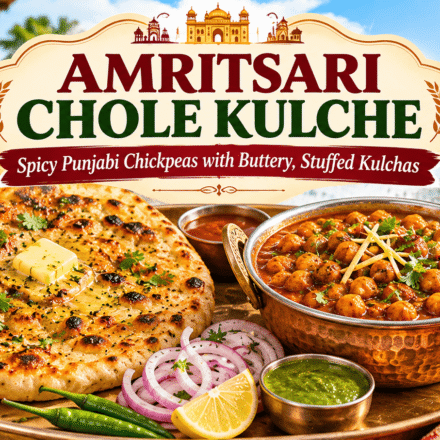
Amritsari Chole Kulche Recipe: Punjabi Street Food at Home
Amritsari Chole Kulche: The Famous Punjabi Street Food You Can Make at Home
Amritsari Chole Kulche brings together two much-loved parts of Punjabi cooking: spicy chickpea curry and hot, stuffed flatbread. The chole is rich, tangy and full of roasted spices. The kulcha is soft inside, crisp around the edges and often brushed generously with butter. Together, they make a filling meal that tastes just as good for breakfast as it does for lunch or dinner.
This famous combination comes from Amritsar, a city known for its lively food culture and warm hospitality. Local food stalls and dhabas serve kulchas straight from the tandoor with bowls of freshly prepared chole. At home, you can recreate those familiar flavours with a pressure cooker, a heavy pan and a regular tawa.
This recipe is a practical home-style version. It uses dried white chickpeas, a tangy spice blend and potato-stuffed kulchas cooked on the stovetop. You do not need a traditional clay oven to enjoy a satisfying plate of Amritsari Chole Kulche.
Table of Contents
- What Makes Amritsari Chole Kulche Special?
- A Taste of Amritsar’s Food Culture
- Amritsari Chole vs Other Punjabi Chole
- Ingredients for Amritsari Chole
- How to Make Amritsari Chole
- Ingredients for Amritsari Aloo Kulcha
- How to Make Stuffed Kulcha at Home
- How to Serve Amritsari Chole Kulche
- Tips for Restaurant-Style Results
- Common Mistakes and How to Avoid Them
- Delicious Variations to Try
- Storage and Reheating Instructions
- Is Amritsari Chole Kulche a Healthy Meal?
- Frequently Asked Questions
- Bring the Flavours of Amritsar to Your Kitchen
What Makes Amritsari Chole Kulche Special?
Amritsari Chole Kulche is more than chickpea curry served with bread. The combination depends on contrast. The chole brings deep spice, a thick gravy and a pleasant sour note. The kulcha adds a soft, buttery texture with a lightly crisp surface.
The chickpeas are usually cooked until tender and then simmered with onions, tomatoes and ground spices. Ingredients such as dried pomegranate seeds, dry mango powder and black salt give the curry its characteristic tang. Some home recipes also use a tea bag or dried amla while cooking the chickpeas to create a darker colour.
The kulcha is a leavened flatbread traditionally baked in a tandoor. Amritsari versions are often stuffed with mashed potato, onion, coriander and spices. A generous layer of butter or ghee gives the bread its familiar richness.
The two dishes balance each other beautifully. A bite of warm kulcha with spicy chole delivers a mix of softness, crunch, heat and tanginess. Add sliced onions, green chillies and tamarind chutney, and the meal feels complete.
A Taste of Amritsar’s Food Culture
Amritsar has a strong reputation for its food. The city’s culinary identity includes tandoori breads, chole, parathas, lassi, sweets and rich Punjabi meals. Food is closely connected with everyday life, hospitality and the city’s busy markets.
Amritsari kulcha is one of the best-known examples of this tradition. It is a stuffed, leavened flatbread that is cooked in a clay oven until the outside develops a crisp texture while the centre stays soft. Potato is a popular filling, although onion, cauliflower and paneer are also used.
The connection between Amritsar and its kulcha is believed to go back at least two centuries. The exact story of its origin is not settled. Some accounts connect it with local adaptations of naan and other leavened breads. Stories about royal kitchens and outside culinary influences are also part of its food history, but they should be treated as accounts rather than confirmed facts. Source: The Indian Express.
Today, the kulcha is a familiar breakfast and street-food favourite in Amritsar. It is commonly served with spicy chole, chutney, pickled onions and butter. The city’s tandoori food culture has also helped make this combination popular with visitors from across India.
The recipe below takes inspiration from that local style while keeping the method manageable for an ordinary home kitchen.
Amritsari Chole vs Other Punjabi Chole
Punjabi chole recipes share several ingredients, but their flavours and cooking methods can differ. Amritsari chole is known for its strong spice profile and tangy taste. Dried pomegranate seeds, anardana powder, dry mango powder and black salt can all contribute to its distinctive flavour.
Pindi chole is another well-known chickpea preparation associated with the wider Punjab region. It is often darker, drier and less gravy-based than the version commonly served with kulcha. The two dishes are related in their use of chickpeas and Punjabi spices, but they are not identical.
Regular Punjabi chole may have a more pronounced onion-tomato gravy. Some versions are mildly sweet, while others are hot and sour. The ingredients and cooking style vary between households and restaurants.
For this recipe, the curry has a thick masala base with enough gravy to coat the chickpeas. Anardana and amchur provide the sourness, while roasted spices build warmth. You can adjust the chilli and sour ingredients to suit your taste.
Ingredients for Amritsari Chole
This recipe serves approximately four people. Use dried white chickpeas, also called kabuli chana, for the best texture.
For boiling the chickpeas
- 1½ cups dried white chickpeas
- 4 to 5 cups water, or enough for soaking
- 1 black tea bag, optional
- 1 small cinnamon stick
- 2 black cardamoms
- 3 green cardamoms
- 4 cloves
- 1 bay leaf
- ½ teaspoon salt
- Fresh water for pressure cooking
The tea bag is optional. It adds colour, but it is not essential to the flavour. You can skip it if you prefer a lighter-coloured curry. Some traditional-style recipes also use dried amla to deepen the colour and add a mild tart note.
For the chole masala
- 2 tablespoons oil or ghee
- 2 medium onions, finely chopped
- 2 medium tomatoes, finely chopped or puréed
- 1 tablespoon ginger-garlic paste
- 2 green chillies, finely chopped
- 1 teaspoon cumin seeds
- 1½ teaspoons coriander powder
- 1 teaspoon roasted cumin powder
- 1 teaspoon red chilli powder
- ½ teaspoon turmeric powder
- 1 teaspoon garam masala
- 1 to 1½ teaspoons anardana powder
- ½ to 1 teaspoon amchur powder
- ½ teaspoon black salt
- Regular salt to taste
- 1 tablespoon chopped coriander leaves
- 1 teaspoon crushed kasuri methi, optional
- 1 tablespoon ghee for the final tempering, optional
For garnish
- Ginger cut into thin strips
- Chopped fresh coriander
- Sliced onions
- Lemon wedges
- Green chillies
Anardana gives the curry a fruity sourness. If you cannot find it, use a little extra amchur or lemon juice. Add the substitute gradually because the strength of sour ingredients can vary.
How to Make Amritsari Chole
The best chole begins with properly soaked chickpeas. Give them enough time to absorb water before cooking. This helps them soften evenly and reduces the pressure-cooking time.
Step 1: Soak the chickpeas
Wash the dried chickpeas two or three times. Place them in a large bowl and cover them with plenty of water. They will expand as they soak, so leave enough room in the bowl.
Soak them for at least eight hours, preferably overnight. Before cooking, drain the soaking water and rinse the chickpeas once more. Do not use the old soaking water for the curry.
Step 2: Pressure-cook the chickpeas
Transfer the soaked chickpeas to a pressure cooker. Add fresh water, the cinnamon stick, black and green cardamoms, cloves, bay leaf and salt. Add the optional tea bag if you want a darker colour.
Pressure-cook until the chickpeas are soft and cooked through. The exact time depends on their age, soaking time and your cooker. Start checking after several whistles or around 20–25 minutes of pressure cooking, following your cooker’s instructions.
Allow the pressure to release safely before opening the cooker. Check a chickpea by pressing it between your fingers. It should mash easily without feeling hard in the centre.
Remove the tea bag and whole spices. Reserve some of the cooking liquid. It will help you adjust the curry later.
Step 3: Prepare the spice base
Heat oil or ghee in a heavy-bottomed kadai. Add cumin seeds and let them crackle. Add the chopped onions and cook over medium heat until they turn golden brown.
Stir regularly so the onions cook evenly. Add the ginger-garlic paste and green chillies. Cook until the raw smell fades.
Add the tomatoes and mix well. Cook until they soften and the mixture thickens. You should see some oil separating around the edges. This is a useful sign that the masala has cooked properly.
Step 4: Add the ground spices
Lower the heat before adding coriander powder, cumin powder, red chilli powder and turmeric. Stir for a few seconds. If the masala looks dry, add a splash of water to prevent the spices from burning.
Add anardana powder, amchur and black salt. Mix everything well. These ingredients give the curry its tangy character, so start with the smaller quantities if you are unsure about the sourness.
Cook the masala for another minute or two. Taste a small amount and adjust the chilli or sourness if needed.
Step 5: Add the cooked chickpeas
Add the boiled chickpeas to the masala. Stir gently until every chickpea is coated. Avoid mashing them too much at this stage.
Pour in about one cup of the reserved cooking liquid. Mix and bring the curry to a gentle simmer. Add more liquid if you prefer a thinner gravy.
Use the back of a spoon to mash a small portion of the chickpeas against the side of the pan. This naturally thickens the gravy without requiring flour or cream.
Step 6: Simmer until the flavours come together
Cover the pan partially and simmer the chole for 15–20 minutes over low heat. Stir occasionally to prevent the masala from sticking to the bottom.
The gravy should become thick and cling to the chickpeas. If it becomes too dry, add a little hot water. If it is too thin, simmer uncovered for a few more minutes.
Add garam masala and crushed kasuri methi towards the end. Taste and adjust the salt. Finish with chopped coriander and ginger strips.
Step 7: Add an optional ghee tempering
For a richer dhaba-style finish, heat a tablespoon of ghee in a small pan. Add a pinch of cumin seeds, a little red chilli powder and a pinch of garam masala.
Let the spices sizzle briefly, then pour the tempering over the chole. Do not let the chilli powder burn. This final step adds aroma and richness, but you can skip it for a lighter curry.
Keep the chole covered while you prepare the kulchas. The resting time allows the flavours to settle.
Ingredients for Amritsari Aloo Kulcha
This recipe makes approximately six medium stuffed kulchas.
For the dough
- 2 cups all-purpose flour or maida
- ¼ cup plain yoghurt
- 1 teaspoon baking powder
- ¼ teaspoon baking soda
- 1 teaspoon sugar
- ½ teaspoon salt
- 2 tablespoons oil
- About ½ cup water, as needed
- A little extra flour for rolling
Yoghurt adds moisture and a slight tang. Baking powder and baking soda help create a softer bread. The amount of water may vary depending on the flour, so add it gradually.
For the potato filling
- 3 medium potatoes, boiled and cooled
- 1 small onion, finely chopped
- 2 green chillies, finely chopped
- 1 tablespoon chopped coriander leaves
- 1 teaspoon crushed coriander seeds
- ½ teaspoon cumin powder
- ½ teaspoon red chilli powder
- ½ teaspoon amchur powder
- ½ teaspoon anardana, crushed, optional
- ½ teaspoon ajwain
- ½ teaspoon garam masala
- Salt to taste
For topping and serving
- Nigella seeds, optional
- Crushed coriander seeds
- Chopped coriander leaves
- Butter or ghee for brushing
- A little water for sticking the topping
How to Make Stuffed Kulcha at Home
A good kulcha should be soft inside and lightly crisp outside. The dough needs enough resting time, while the filling should remain dry enough to handle. These two details make stuffing and cooking much easier.
Step 1: Prepare the dough
Add flour, baking powder, baking soda, sugar and salt to a large mixing bowl. Mix the dry ingredients evenly.
Add yoghurt and oil. Rub them into the flour with your fingertips. Gradually add water and knead until you get a soft, smooth dough.
The dough should feel softer than regular chapati dough but should not be sticky. Cover it with a damp cloth and let it rest for 60–90 minutes. This gives the flour time to hydrate and makes the dough easier to roll.
Step 2: Make the potato filling
Peel the boiled potatoes and mash them in a bowl. Make sure they are completely cool before mixing in the other ingredients.
Add onion, green chillies, coriander leaves, crushed coriander seeds, cumin powder, chilli powder, amchur, ajwain, garam masala and salt. Mix until everything is evenly combined.
Taste the filling and adjust the seasoning. It should be flavourful and slightly tangy. Avoid adding water or too much moisture, as a wet filling can tear the dough during rolling.
Step 3: Divide the dough and filling
Knead the rested dough gently for a few seconds. Divide it into six equal portions. Roll each portion into a smooth ball.
Divide the potato mixture into six portions as well. Keep the portions roughly equal so each kulcha gets a generous filling.
Cover the dough balls with a clean cloth while you work. This prevents the surface from drying out.
Step 4: Stuff the kulchas
Take one dough ball and flatten it slightly with your fingers. Dust it with a little flour if it feels sticky.
Place one portion of potato filling in the centre. Bring the edges together and pinch them closed. Make sure there are no open gaps.
Turn the stuffed ball over so the sealed side faces down. Gently flatten it with your fingers before rolling. Use light pressure and move the rolling pin from the centre towards the edges.
Do not roll too thinly. A stuffed kulcha needs enough thickness to hold the filling and develop a soft centre.
Step 5: Add the topping
Sprinkle crushed coriander seeds, nigella seeds and chopped coriander over the top. Press them gently into the dough so they stick.
If the topping does not stay in place, lightly brush the surface with water before adding it. You can also use a little kasuri methi for extra aroma.

Step 6: Cook on a tawa
Heat a heavy iron or cast-iron tawa over medium heat. Place the kulcha on the hot surface with the topped side facing up.
Cook until small bubbles appear and the bottom develops light brown spots. Flip it carefully and cook the other side. Press gently around the edges with a spatula so the bread cooks evenly.
Flip once more if needed. Continue cooking until both sides are golden and the centre is fully cooked. Adjust the heat if the outside browns too quickly.
Brush the hot kulcha with butter or ghee. Repeat with the remaining dough portions.
Step 7: Create a flaky texture
Amritsari kulchas are often served hot with a crisp exterior and soft, layered interior. A home-style tawa version will not be exactly the same as a tandoor-baked kulcha, but a few simple steps improve the texture.
Cook the kulcha over steady medium heat rather than rushing it over a very high flame. Brush it with butter after cooking, then gently press or crush it between clean kitchen towels or with a spatula. This can help loosen the layers without burning your hands.
Serve immediately while the bread is still warm.
How to Serve Amritsari Chole Kulche
The best way to enjoy this meal is to serve both components hot. Place one or two kulchas on a plate and add a generous bowl of chole. Finish the curry with ginger strips and fresh coriander.
Add sliced onions, lemon wedges and green chillies on the side. A spoonful of tamarind chutney brings another layer of sweetness and sourness. Mint chutney is also a good choice if you prefer a fresher flavour.
A glass of chilled salted lassi makes a traditional-style accompaniment. You can also serve plain yoghurt or a simple cucumber salad to balance the spices.
For a fuller Punjabi-style spread, add pickled carrots, green chillies or a small serving of raita. However, keep the sides simple. The chole and kulcha should remain the main attraction.
If you want to serve the dish for guests, prepare the chole in advance and make the kulchas just before serving. Freshly cooked kulchas have a much better texture than ones left sitting for a long time.
Tips for Restaurant-Style Results
Small details can make a big difference to the final flavour. Keep these tips in mind when preparing the recipe.
Soak the chickpeas properly: Overnight soaking helps the chickpeas cook evenly. If they remain hard after pressure cooking, continue cooking rather than trying to fix them in the masala.
Cook the onion-tomato masala well: Raw onion or tomato flavours can make the curry taste unfinished. Allow the masala to cook until it thickens and the oil begins to separate.
Balance the sourness: Anardana and amchur both add tang. Use them carefully and adjust after tasting. Too much can overpower the other spices.
Mash a few chickpeas: A small amount of mashed chickpeas creates a naturally thick gravy. This gives the chole a fuller texture without extra ingredients.
Keep the potato filling dry: Watery filling makes the kulcha difficult to seal. Cool the boiled potatoes before mashing and avoid adding wet chutneys to the mixture.
Rest the dough: Do not skip the resting period. It makes the dough easier to shape and helps the kulchas cook more evenly.
Use a heavy tawa: A thick tawa distributes heat more evenly. It also reduces the risk of burning the bread before the centre cooks.
Serve the kulcha immediately: Buttered kulchas taste best straight from the tawa. Keep them covered with a clean cloth if you need to hold them briefly.
Common Mistakes and How to Avoid Them
The chickpeas remain hard
This usually happens when the chickpeas have not soaked long enough or are old. Soak them overnight and check that they are fully tender before adding them to the masala. If they remain firm, pressure-cook them for longer with fresh water.
The chole tastes too sour
Anardana and amchur can become overpowering if you add too much. Start with smaller quantities and adjust near the end. A little extra cooked masala and chickpea liquid can help soften the flavour.
The gravy is too thin
Simmer the curry uncovered for a few minutes. Mash a small portion of the chickpeas and stir them into the gravy. Avoid adding flour or cornstarch, as they can change the natural texture.
The kulcha breaks while rolling
The filling may be too wet, or the dough may be too dry. Make sure the potatoes have cooled and the filling is not watery. If the dough feels stiff, knead in a little water and allow it to rest again.
The kulcha turns hard
Overcooking and excessive flour during rolling can make the bread dry. Use medium heat, avoid rolling the dough too thin and brush the cooked kulcha with butter or ghee.
The outside cooks but the centre stays raw
The tawa may be too hot. Lower the heat and cook the kulcha for longer, turning it as needed. A stuffed bread needs enough time for the heat to reach the filling.
Delicious Variations to Try
The classic potato-stuffed kulcha is a favourite, but you can change the filling to suit your taste. These variations keep the spirit of the dish while adding a little variety.
Paneer Kulcha
Crumble fresh paneer and mix it with chopped onion, green chilli, coriander, cumin and amchur. Use this mixture as the filling. Keep it fairly dry so the kulcha seals easily.
Paneer kulcha works especially well with spicy chole. Its mild flavour balances the heat of the curry.
Onion Kulcha
Finely chop onions and mix them with coriander leaves, green chillies, crushed coriander seeds and a pinch of salt. Add the salt just before stuffing because onions release moisture.
This version has a sharp, savoury flavour. It is a good choice if you want something lighter than potato filling.
Gobi Kulcha
Grate cauliflower and squeeze out excess moisture. Mix it with ginger, green chilli, coriander, ajwain and amchur. Cook the mixture briefly if it feels too wet.
Gobi kulcha has a slightly sweet vegetable flavour with a gentle spice note. Serve it with hot chole and mint chutney.
Mixed Vegetable Kulcha
Combine finely chopped carrots, peas, beans and potatoes. Cook the vegetables until tender, then mix them with Punjabi spices. Mash the mixture lightly before stuffing.
This is a useful option when you want to use leftover cooked vegetables. Keep the filling compact and avoid adding too much moisture.
Whole Wheat Kulcha
Replace some of the maida with whole wheat flour. A half-and-half mixture is a practical starting point. The bread will have a denser texture and a more pronounced wheat flavour than a traditional refined-flour version.
Add water gradually because whole wheat flour may absorb it differently. Allow the dough to rest well before shaping.
Baked Kulcha
You can bake stuffed kulchas if you do not want to cook them on a tawa. Preheat the oven and place the kulchas on a hot baking tray. Bake until they are cooked through and lightly browned, adjusting the temperature and time to suit your oven.
Brush them with butter or ghee after baking. The result will differ from a tandoor-made kulcha, but it is a useful alternative for home kitchens.
Storage and Reheating Instructions
Chole and kulcha are best stored separately. The curry keeps well, while the bread is more enjoyable when freshly cooked.
Storing the chole
Allow the chole to cool before transferring it to an airtight container. Refrigerate it promptly and use it within three to four days.
The gravy may thicken as it sits. Add a little water when reheating and warm it gently in a pan. Stir occasionally so the chickpeas do not stick to the bottom.
You can also freeze the chole in meal-sized portions. Use freezer-safe containers and leave a little space at the top. For best quality, use it within about two months. Thaw it in the refrigerator before reheating and make sure it is piping hot throughout.
Storing the kulcha
Let the kulchas cool completely before storing them. Place them in an airtight container or wrap them individually. Refrigerate and use within two days for the best texture.
To reheat, place a kulcha on a warm tawa. Turn it once or twice until heated through. Brush with a little butter if desired.
You can freeze cooked kulchas with baking paper between them so they do not stick together. Reheat them directly on a tawa over low to medium heat, turning until warm.
Avoid storing hot kulchas in a sealed container. Trapped steam can make them soggy.
Is Amritsari Chole Kulche a Healthy Meal?
Amritsari Chole Kulche can be part of a balanced diet, although the overall nutrition depends on portion size and preparation. Chickpeas provide plant-based protein, fibre and several important minerals. They also make the curry filling and satisfying.
The kulcha provides carbohydrates and energy. However, traditional versions often use refined flour and generous amounts of butter or ghee. That makes the meal richer than a simple whole-grain roti with vegetable curry. You can make a few adjustments without losing the main flavours. Use a moderate amount of oil in the chole, reduce the butter on the kulcha and replace part of the refined flour with whole wheat flour. Serve a smaller portion of kulcha with a generous bowl of chickpeas.
Adding a fresh salad or plain yoghurt can make the meal more balanced. If you have a medical condition or specific dietary needs, adjust the ingredients and portion size according to your individual requirements.
Frequently Asked Questions
1. Can I make Amritsari chole without a tea bag?
Yes. The tea bag is optional and mainly used to give the chickpeas a darker colour. You can leave it out without affecting the basic flavour of the curry. Some recipes use dried amla instead.
2. Can I use canned chickpeas?
Yes. Canned chickpeas are convenient when you do not have time to soak dried ones. Drain and rinse them before adding them to the cooked masala. Since they are already cooked, simmer them gently so they absorb the spices without breaking apart.
3. What gives Amritsari chole its tangy flavour?
Anardana, or dried pomegranate seeds, is a common source of tanginess. Amchur, black salt and sometimes lemon juice also contribute. The exact combination varies between recipes and households.
4. Is Amritsari chole the same as Pindi chole?
No. Both are chickpea dishes associated with the Punjab region, but their preparation and texture can differ. Amritsari chole is often served with kulcha and may have a thicker masala gravy. Pindi chole is commonly prepared with a drier texture and a different balance of spices.
5. Can I make kulcha without yoghurt?
Yes. You can use a little milk or water instead, although the flavour and texture may change. Yoghurt adds moisture and mild acidity, so the final bread may not be exactly the same without it.
6. Can I make Amritsari kulcha without a tandoor?
Yes. A heavy tawa is a practical home alternative. Cook the stuffed kulcha over medium heat, turning it until both sides are golden and the filling is hot. The result will not have exactly the same texture as a traditional tandoor-baked kulcha, but it can still be delicious.
7. Why does my kulcha filling come out?
The dough may be too thin, or the filling may be too wet. Use cooled, well-mashed potatoes and seal the dough properly around the filling. Roll gently rather than pressing hard.
8. Can I prepare the chole one day in advance?
Yes. In fact, the flavour often develops further after the curry rests. Refrigerate it in an airtight container once it has cooled, then reheat it thoroughly before serving. Make the kulchas fresh for the best texture.
9. What can I serve with Amritsari Chole Kulche?
Serve the dish with sliced onions, green chillies, lemon wedges and tamarind chutney. Mint chutney, pickles, plain yoghurt and salted lassi are also good accompaniments.
10. Can I make this recipe less spicy?
Yes. Reduce the red chilli powder and green chillies. Keep the coriander, cumin and other aromatic spices so the curry still has depth. You can also serve the kulcha with plain yoghurt to balance the heat.
11. Can I make the kulcha dough in advance?
You can prepare the dough ahead and refrigerate it in a covered container. Bring it closer to room temperature before shaping. The dough may continue to change as it rests, so check its texture and avoid leaving it for too long.
12. What is the difference between naan and Amritsari kulcha?
Both are leavened breads, but Amritsari kulcha is often stuffed and cooked until crisp outside and soft inside. Naan is commonly served plain or with toppings and is usually softer and more flexible. The exact style depends on the region and the cook.
Bring the Flavours of Amritsar to Your Kitchen
Amritsari Chole Kulche captures the generous flavours of Punjabi food in one satisfying meal. The chickpeas are spicy and tangy, while the stuffed kulcha brings a soft centre and a buttery finish. Fresh onions, chutney and lemon complete the combination.
You do not need a traditional tandoor or a restaurant kitchen to make it at home. Give the chickpeas enough time to soak, cook the masala patiently and let the kulcha dough rest before shaping. These simple steps help bring the flavours together.
Make the chole ahead if you are planning a family meal, but cook the kulchas just before serving. Put everything on the table while it is hot, add your favourite sides and enjoy a little taste of Amritsar at home.
Bharat Recipes celebrates Indian flavours, one memorable meal at a time.









[…] Kathi Roll is not simply a filling wrapped in flatbread. Its character comes from the way the paratha, filling and fresh toppings work together. Each part adds a different texture and flavour, creating […]
[…] the chicken is marinated and the masala is ready, the cooking process becomes straightforward. Use a heavy-bottomed kadai or deep pan so […]