

Goan Fish Curry Recipe: Coconut-Based Coastal Fish Curry
Goan Fish Curry: A Coastal Indian Classic with Coconut, Red Chillies and Tangy Spices
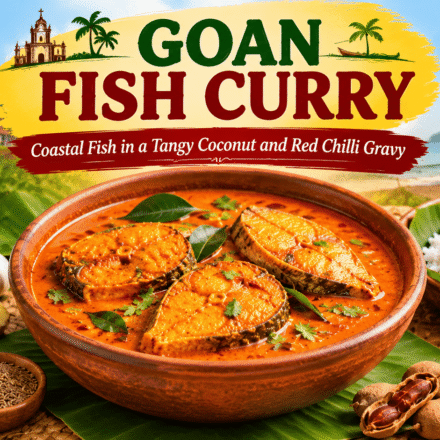
Goan Fish Curry brings the flavours of India’s western coast straight to your kitchen. It combines fresh fish with a smooth coconut masala, dried red chillies, coriander, cumin, garlic and a touch of sourness from tamarind or kokum. The result is a bright, aromatic curry with a gentle heat and a rich, tangy gravy.
In Goa, fish and rice are familiar parts of everyday coastal cooking. Local markets offer different varieties of fresh seafood, while family recipes reflect the ingredients available in each home. Some cooks prefer mackerel, others choose kingfish or pomfret. The spice balance, thickness of the gravy and choice of souring agent can also vary.
This recipe takes inspiration from the traditional Goan coconut-based fish curry. It uses firm fish steaks, freshly grated coconut, Kashmiri red chillies and tamarind, with kokum as an optional alternative. The method is simple enough for a home kitchen, but the flavours remain bold and distinctive.
Serve it with steamed rice and a simple vegetable side. The coconut gravy soaks into the rice, while the tangy spices bring out the natural flavour of the fish. If you enjoy coastal Indian food, this is a recipe worth adding to your regular cooking list.
Table of Contents
- What Makes Goan Fish Curry Special?
- A Taste of Goa’s Coastal Food Culture
- Understanding the Main Ingredients
- Choosing the Right Fish
- Ingredients for Goan Fish Curry
- How to Prepare the Fish
- How to Make the Goan Coconut Masala
- How to Cook Goan Fish Curry
- How to Get the Right Curry Consistency
- Tips for Authentic Goan-Style Flavour
- Common Mistakes and How to Avoid Them
- Delicious Goan Fish Curry Variations
- What to Serve with Goan Fish Curry
- Storage and Reheating Instructions
- Is Goan Fish Curry a Healthy Meal?
- Frequently Asked Questions
- Bring Goa’s Coastal Flavours to Your Kitchen
What Makes Goan Fish Curry Special?
Goan Fish Curry stands out because of its balance of coconut, spice and sourness. The coconut gives the gravy body and a mild sweetness. Dried red chillies add colour and heat, while coriander and cumin create a warm, earthy base. Tamarind or kokum brings the sharp, fruity tang that keeps the curry from tasting too rich.
Unlike some North Indian gravies that rely heavily on onions, tomatoes and cream, many Goan fish curry preparations use a freshly ground coconut masala. The ingredients are blended into a smooth paste before they meet the cooking liquid. This creates a naturally thick sauce that coats the fish without needing flour or cream.
The fish is usually added after the masala has cooked and the gravy has reached the right flavour. It then simmers gently until just cooked. This matters because fish can break apart if you stir it too much or leave it bubbling for too long.
The final curry should taste lively rather than heavy. You should notice the coconut first, followed by the spices and a pleasant sour finish. The heat can be adjusted, but the combination of coconut and tangy ingredients gives the dish much of its character.
A Taste of Goa’s Coastal Food Culture
Goa’s food reflects its coastline, local produce and long history of cultural exchange. Fish, rice, coconut, chillies and souring ingredients are familiar parts of many Goan kitchens. Their combinations change from one household to another, which is why there is no single recipe that represents every Goan fish curry.
The phrase xitt-kodi is commonly used for the familiar pairing of rice and curry. Fish curry with rice is an everyday meal in many coastal homes. The fish may be fresh, dried or preserved, depending on the season and the household’s cooking habits.
Goan cuisine also reflects different community traditions. Hindu and Catholic households share some ingredients and techniques, while their recipes may differ in the use of spices, vinegar, coconut, onions and other flavourings. The influence of Portuguese rule is part of Goa’s wider food history, although coconut-based fish curries also belong to the region’s broader Konkan culinary traditions.
Kokum is one ingredient that gives many coastal dishes their distinctive sour taste. It is a dried fruit used in parts of Goa and the Konkan region. Tamarind is another familiar option, and some recipes use one or both. The choice depends on local preference and the recipe being followed.
A study of food practices in Goa also records the importance of local chillies, coconut, kokum and other preserved ingredients in household cooking, particularly in preparation for the monsoon season. These ingredients are more than flavourings; they are part of the region’s food traditions.
The recipe here follows a widely used coconut-and-red-chilli approach. It is a home-style version rather than a claim to represent every Goan community or family.
Understanding the Main Ingredients
A good Goan fish curry does not need a long list of complicated ingredients. The flavour comes from using a few important ingredients in the right balance.
Fresh coconut
Freshly grated coconut gives the curry its body and gentle sweetness. It also helps create a smooth masala that clings to the fish.
Frozen grated coconut is a useful substitute when fresh coconut is not available. Thaw it before grinding. Desiccated coconut can work in a pinch, but it may produce a different texture and flavour.
Dried red chillies
Kashmiri red chillies are popular in many home-style versions because they provide a deep red colour without overwhelming heat. You can combine them with a hotter variety if you prefer a spicier curry.
Remove the stems and soak the chillies in warm water before grinding. This softens them and helps the blender produce a smoother paste.
Coriander and cumin
Coriander seeds bring a warm, citrus-like aroma, while cumin adds an earthy note. Grinding whole seeds with the other masala ingredients gives the curry a fuller flavour.
Garlic and ginger
Garlic gives the curry a savoury depth. Ginger adds warmth and a fresh aroma. Use both in moderate quantities so they support the coconut and fish rather than overpower them.
Tamarind or kokum
Tamarind provides a sharp, familiar sourness. Kokum has a more fruity and slightly different tang. Both are used in coastal cooking, but they are not identical in flavour.
Use one as your main souring ingredient and adjust it gradually. Too much can make the curry harsh.
Turmeric
Turmeric adds colour and a mild earthy flavour. It is also commonly used to season fish before cooking. A small amount is enough.
Coconut oil
Coconut oil complements the coconut masala and gives the curry a familiar coastal aroma. If you do not have it, use a neutral cooking oil. The flavour will be slightly different but the recipe will still work.

Choosing the Right Fish
The fish you choose affects the texture and final flavour of the curry. Firm fish is usually easier to handle because it holds its shape during simmering.
Popular choices include:
- Kingfish (surmai): Firm flesh that works well in thick or medium coconut gravies.
- Pomfret: Delicate flavour and a tender texture. Use gentle handling while cooking.
- Mackerel: A strong-flavoured fish that pairs well with tangy, spicy masala.
- Seer fish: Firm steaks that are easy to portion and serve.
- Rohu: A practical freshwater option in many Indian markets, although its flavour and texture differ from coastal fish.
- Tilapia: A convenient option where fresh coastal fish is not available. Choose thicker fillets and handle them carefully.
For this recipe, use about 600–700 g of firm fish steaks or thick fillets. If you are using a whole fish, ask the fishmonger to clean it and cut it into curry-sized pieces.
Fresh fish should have a clean, mild smell and firm flesh. Keep it chilled until you are ready to prepare the curry. If you are buying frozen fish, thaw it safely in the refrigerator and drain excess water before seasoning.
Ingredients for Goan Fish Curry
This recipe serves approximately four people.
For the fish
- 600–700 g firm fish steaks or thick fillets
- ½ teaspoon turmeric powder
- ½ teaspoon salt
- 1 teaspoon lemon juice, optional
For the coconut masala
- 1 cup freshly grated coconut
- 6–8 dried Kashmiri red chillies
- 1 tablespoon coriander seeds
- 1 teaspoon cumin seeds
- ½ teaspoon turmeric powder
- 4–5 garlic cloves
- 1 small piece of ginger, about 2 cm
- 1 small ball of tamarind, or 3–4 dried kokum pieces
- ½ teaspoon black peppercorns, optional
- Water as needed for grinding
For the curry
- 2 tablespoons coconut oil
- 1 medium onion, finely chopped
- 1 medium tomato, chopped, optional
- 1–2 green chillies, slit lengthwise
- 2–2½ cups water, adjusted as needed
- Salt to taste
- 1–2 additional kokum pieces, optional
- Chopped coriander leaves, optional
For serving
- Steamed white rice or Goan red rice
- Lemon wedges
- Sliced onion, optional
- A simple vegetable side
Ingredient note: Tamarind and kokum are alternatives in this version. If you use tamarind in the masala, taste the curry before adding any extra souring ingredient. If you prefer kokum, soak the pieces briefly and add them to the simmering gravy.
How to Prepare the Fish
Start by cleaning the fish properly. If you are using steaks, check that the scales and any remaining gills or unwanted parts have been removed. Rinse briefly under clean running water and drain well.
Place the fish pieces in a bowl. Add turmeric, salt and a little lemon juice if you like. Rub the seasoning gently over the pieces and leave them for about 10–15 minutes in the refrigerator.
This short resting period seasons the fish before it enters the curry. Avoid adding too much lemon juice, especially if your masala already contains tamarind or kokum.
Do not leave raw fish at room temperature for a long time. Keep it chilled while you prepare the masala. Before cooking, remove any excess liquid from the bowl.
You do not need to fry the fish first for this recipe. It cooks directly in the coconut gravy, allowing the fish to absorb the spices as it simmers.
How to Make the Goan Coconut Masala
The masala gives this curry its colour, aroma and texture. Grind it smoothly so the coconut does not leave a coarse or grainy finish.
Step 1: Soak the red chillies
Remove the stems from the dried red chillies. If you want a milder curry, remove some of the seeds as well.
Place the chillies in a bowl and cover them with warm water. Let them soak for 15–20 minutes until soft. Drain before grinding.
Step 2: Prepare the souring ingredient
If you are using tamarind, soak the small ball in warm water for about 10 minutes. Squeeze it to release the pulp and remove any seeds or fibres.
If you are using kokum, rinse the dried pieces and soak them briefly in warm water. Keep them ready for the curry. You can add them directly to the gravy rather than grinding them into the masala.
Step 3: Grind the whole spices
Place the coriander seeds, cumin seeds and optional peppercorns in a blender. Grind them briefly to break them down.
Add the soaked red chillies, grated coconut, turmeric, garlic, ginger and tamarind pulp. Pour in a little water and blend until you get a smooth, thick paste.
Scrape down the sides of the blender if needed. Add water in small amounts rather than all at once. The masala should be thick enough to coat a spoon.
Step 4: Check the paste
Taste a tiny amount of the paste carefully. It should have a balance of coconut, spice and sourness. Remember that the flavour will become milder when diluted with water and cooked.
If the paste is too sour, reduce the amount used or balance it with more coconut. If it lacks heat, add a little extra chilli. Avoid making the masala too salty because you will season the curry again later.
How to Cook Goan Fish Curry
Once the masala is ready, the curry comes together in a few simple stages. Use a wide pan or kadai so the fish pieces can sit in the gravy without being stacked on top of one another.
Step 1: Cook the onion
Heat coconut oil in a wide pan over medium heat. Add the chopped onion and cook until it softens and becomes lightly golden.
If you prefer a simpler, less oil-based preparation, you can use a small amount of oil and soften the onion gently. Avoid browning it too deeply because that can change the colour and flavour of the curry.
Step 2: Add the ground masala
Lower the heat and add the coconut masala. Stir gently so it combines with the onion and oil.
Cook for about 5–7 minutes, stirring often. The raw smell should fade and the paste should become fragrant. If it sticks to the pan, add a small splash of water.
Step 3: Add water and build the gravy
Pour in about two cups of water and stir until the masala dissolves evenly. Add the slit green chillies and the optional chopped tomato.
Bring the curry to a gentle boil. Let it simmer for around 5–7 minutes so the spices cook through and the gravy develops flavour.
If you are using kokum, add the soaked pieces at this stage. Taste the gravy before adding more sourness or salt.
Step 4: Add the fish
Lower the heat and carefully place the seasoned fish pieces into the gravy. Arrange them in a single layer where possible.
Use a spoon to cover the top of the fish with a little gravy. Avoid stirring vigorously because the pieces can break apart.
Step 5: Simmer until the fish is cooked
Cover the pan partially and cook over low to medium-low heat. The cooking time depends on the thickness and type of fish. Many medium-sized steaks take around 7–10 minutes.
Check the thickest piece. Fish should turn opaque and separate easily when tested with a fork. If you use a food thermometer, the centre should reach 63°C.
If the fish is cooked but the gravy is still too thin, remove the fish carefully and simmer the gravy briefly before returning the pieces to the pan. This prevents the fish from overcooking.
Step 6: Adjust and finish
Taste the curry and adjust the salt. Add a little more tamarind water or kokum only if the gravy needs extra tang.
Turn off the heat once the fish is cooked. Let the curry rest for five minutes before serving. This gives the flavours time to settle without continuing to cook the fish.
Serve hot with steamed rice.
How to Get the Right Curry Consistency
Goan fish curry can range from fairly thin to moderately thick, depending on the household and the dish being prepared. For a rice accompaniment, a pourable gravy works particularly well.
The coconut masala should be ground smoothly. If it is too coarse, the curry may feel gritty. If the paste is too thick, add water gradually until it reaches the consistency you prefer.
Avoid adding too much water at the beginning. It is easier to thin a thick curry than to correct a watery one without overcooking the fish.
If the gravy is too thin, remove the fish once it is cooked and simmer the sauce uncovered for a few minutes. You can also grind a little extra coconut with water and add it to the gravy, then simmer until cooked through.
If the curry is too thick, add a little hot water and stir gently around the fish. Avoid pouring in a large amount at once because that can weaken the flavour.
The finished gravy should coat the fish lightly while remaining easy to spoon over rice.
Tips for Authentic Goan-Style Flavour
A few details help bring out the coastal character of this curry. Keep them in mind when preparing the recipe.
Use fresh or properly thawed coconut: Fresh coconut gives the masala a natural sweetness and smooth body. Frozen grated coconut is a good alternative when handled properly.
Choose the right chillies: Kashmiri chillies add colour and mild heat. Combine them with a hotter chilli if you prefer a stronger kick.
Grind the masala smoothly: A smooth coconut paste gives the curry a more even texture. Add water gradually and blend thoroughly.
Balance the sourness: Tamarind and kokum have different flavour profiles. Start with a moderate amount and adjust after the gravy simmers.
Use firm fish: Fish that holds its shape is easier to cook in a simmering gravy. If you use delicate fillets, handle them gently.
Avoid overcooking: Fish cooks quickly. Add it after the masala has simmered and remove the pan from the heat as soon as the fish is done.
Do not stir aggressively: Move the pan gently or spoon gravy over the fish. This helps keep the pieces intact.
Let the curry rest briefly: A short rest after cooking allows the flavours to come together. Do not leave the fish sitting in a hot pan for too long.
Common Mistakes and How to Avoid Them
The curry tastes too sour
You may have used too much tamarind or kokum. Start with a smaller amount and taste after the gravy simmers. Add more coconut masala or water if the sourness becomes too strong, then adjust the salt.
The curry lacks colour
Kashmiri red chillies give the masala much of its red-orange colour. Use fresh, good-quality chillies and soak them before grinding. Do not rely on excessive chilli powder to create colour because it can make the curry too hot.
The gravy feels grainy
The coconut or spices may not have been ground finely enough. Blend the masala longer and add water in small amounts. If your blender struggles, grind the spices first before adding the coconut.
The fish breaks apart
This often happens when the fish is delicate, the curry boils too vigorously or the pan is stirred too much. Use a gentle simmer and avoid moving the fish with a spoon once it is in the gravy.
The fish becomes rubbery
Overcooking is the most common reason. Adjust the cooking time according to the thickness of the pieces. Check the fish early rather than waiting for a fixed time.
The curry tastes raw
The masala may not have cooked long enough before the fish was added. Simmer the ground coconut paste with the onion and water until the raw smell fades. Add the fish only after the gravy has developed its flavour.
The gravy is too watery
Use less water at the start. If necessary, remove the cooked fish and reduce the gravy separately. This thickens the sauce without keeping the fish on the heat for too long.
Delicious Goan Fish Curry Variations
Goan fish curry changes with the fish available, household preferences and the ingredients used. You can adapt the recipe while keeping the main coconut-and-spice base.
Goan Mackerel Curry
Mackerel has a stronger flavour than many white fish varieties. Its richness works well with red chillies, coconut and sour ingredients.
Clean the mackerel carefully and cut it into suitable portions. Use the same masala, but keep the simmer gentle. Mackerel can be delicate once cooked, so avoid stirring the curry.
Goan Kingfish Curry
Kingfish, also known as surmai in many Indian markets, has firm flesh and is easy to portion into steaks. It works well in a coconut gravy because it holds its shape during cooking.
Season the steaks lightly with turmeric and salt. Add them once the gravy is ready and simmer until just cooked.
Goan Pomfret Curry
Pomfret has a delicate texture and mild flavour. It pairs well with the aromatic coconut masala, but it needs careful handling.
Use medium-sized pieces or small whole cleaned fish. Keep the heat low and avoid turning the fish repeatedly.
Goan Prawn Curry
You can use the same coconut masala for prawns. Clean and devein the prawns before cooking. Add them towards the end because they cook much faster than fish steaks.
Simmer only until the prawns turn opaque and curl. Overcooking can make them tough.
Goan Fish Curry with Coconut Milk
If fresh grated coconut is not available, you can prepare a version with coconut milk. Use a combination of coconut milk, red chilli, coriander, cumin, garlic, ginger and tamarind or kokum.
Add the coconut milk over low heat and avoid a vigorous boil. This version has a smoother, creamier texture and differs slightly from a freshly ground coconut masala.
Mild Goan Fish Curry
For a milder curry, reduce the number of red chillies and use mostly Kashmiri chillies. Keep the coconut and souring ingredients in balance.
You can also serve the curry with plain rice and a simple vegetable side. The flavour will remain aromatic without becoming too hot.
What to Serve with Goan Fish Curry
Steamed rice is the classic companion for Goan fish curry. The gravy soaks into the rice and brings together the coconut, chilli and sour flavours in every bite.
Goan red rice is another excellent option. Its firm texture and earthy taste work well with the curry. If you cannot find it, ordinary steamed rice is perfectly suitable.
You can also serve the curry with:
- Plain steamed rice: A simple choice that lets the curry stand out.
- Goan red rice: A traditional-style accompaniment with a slightly nutty flavour.
- Chapati: Useful if you prefer a flatbread alongside the gravy.
- Cabbage or beans stir-fry: A light vegetable side adds texture without competing with the curry.
- Kachumber salad: Cucumber, onion, tomato and lemon bring freshness.
- Solkadhi: A chilled kokum and coconut-based drink often enjoyed in the Konkan region.
Keep the sides simple. The curry already has a strong combination of spice, coconut and tanginess.
For a family meal, serve the curry in a wide bowl with the fish pieces arranged carefully. Add rice separately and let everyone pour the gravy over their portion.
Storage and Reheating Instructions
Fish curry is best enjoyed freshly cooked. However, you can store leftovers safely if you handle them properly.
Storing in the refrigerator
Allow the curry to cool slightly, then transfer it to a clean, airtight container. Refrigerate it promptly. Use refrigerated fish curry within one to two days for the best quality.
Avoid leaving cooked fish at room temperature for more than two hours. In very hot conditions, refrigerate it sooner.
Reheating the curry
Transfer the curry to a pan and reheat it gently over low heat. Add a small amount of water if the coconut gravy has thickened.
Heat until the curry is steaming hot throughout. Stir the gravy gently around the fish rather than breaking the pieces with a spoon. Reheat only the portion you plan to eat.
Can you freeze Goan fish curry?
You can freeze fish curry, but the texture of the fish and coconut gravy may change after thawing. If you plan to freeze a batch, the masala can be prepared and frozen separately before adding the fish.
For the best texture, cook the fish fresh in the reheated masala. If freezing cooked curry, use a freezer-safe container and thaw it in the refrigerator before reheating.
Do not repeatedly cool and reheat the same batch.
Is Goan Fish Curry a Healthy Meal?
Goan Fish Curry can be part of a balanced meal. Fish provides protein and several important nutrients. Oily fish such as mackerel also provide omega-3 fatty acids. The exact nutritional profile depends on the fish variety and portion size.
Coconut adds flavour and texture, but it also contains saturated fat. The amount used in the masala affects the overall richness of the dish. Coconut oil adds more fat, so you can use a moderate quantity if you prefer a lighter preparation.
A few simple changes can help balance the meal:
- Use a moderate amount of coconut oil.
- Keep the fish portion generous and the rice portion suited to your appetite.
- Serve with steamed vegetables or a fresh salad.
- Avoid adding extra cream or butter.
- Choose fresh fish and handle it safely.
The curry does not need cream or flour to thicken. Coconut and ground spices provide its natural body. This makes it easy to prepare a flavourful meal without adding unnecessary ingredients.
If you have specific dietary needs or a medical condition, adjust the ingredients and portion size according to your individual requirements.
16. Frequently Asked Questions
1. What fish is best for Goan Fish Curry?
Kingfish, mackerel, pomfret and seer fish are popular choices. Firm fish steaks are easier to cook because they hold their shape in the gravy. You can also use thick white fish fillets if local coastal fish is unavailable.
2. What gives Goan Fish Curry its sour taste?
Tamarind and kokum are common souring ingredients. Tamarind has a sharper, familiar tang, while kokum gives a fruity sourness. Some recipes use one, while others combine them.
3. Can I make Goan Fish Curry without coconut?
You can make a fish curry without coconut, but it will have a different flavour and texture. Coconut is an important part of the version in this article. If you cannot use fresh coconut, coconut milk is a practical alternative.
4. Can I use coconut milk instead of grated coconut?
Yes. Coconut milk can replace the freshly ground coconut in a simplified version. Add it gently and avoid boiling it too vigorously. The gravy will be smoother and creamier, with a slightly different texture.
5. Is Goan Fish Curry very spicy?
It depends on the chillies used. Kashmiri red chillies give colour with moderate heat. Add hotter dried chillies if you prefer a stronger curry, or reduce the quantity for a milder version.
6. Can I use tamarind instead of kokum?
Yes. Tamarind works well as a substitute, although the flavour will not be exactly the same. Add a small amount first and adjust after tasting the gravy.
7. Why is my Goan fish curry not red?
The colour depends on the dried red chillies and the coconut masala. Kashmiri chillies are useful for a deep red-orange shade. The exact colour also changes with the amount of coconut and other ingredients.
8. Should I fry the fish before adding it to the curry?
No. This recipe adds the seasoned fish directly to the simmering gravy. That allows the fish to cook gently while absorbing the masala. You can fry it separately if you prefer a different texture, but it changes the preparation.
9. How long should I cook the fish in the curry?
The time depends on the thickness and type of fish. Medium steaks often take around 7–10 minutes over a gentle simmer. Check the thickest part and remove the pan from the heat once the fish is opaque and cooked through.
10. Can I prepare the masala in advance?
Yes. You can grind the coconut masala a few hours ahead and refrigerate it in an airtight container. For longer storage, freeze it in small portions. Use clean utensils and keep it chilled.
11. Can I make Goan Fish Curry with prawns?
Yes. Use cleaned and deveined prawns instead of fish steaks. Add them near the end of cooking because prawns cook quickly. Remove the curry from the heat once they turn opaque and are just cooked.
12. What should I serve with Goan Fish Curry?
Steamed rice is the most familiar accompaniment. Goan red rice, plain rice, a vegetable stir-fry and solkadhi also work well. Keep the sides light so the coconut curry remains the focus.
Bring Goa’s Coastal Flavours to Your Kitchen
Goan Fish Curry brings together the ingredients that make coastal Indian cooking so memorable. Fresh fish, coconut, red chillies, garlic, coriander, cumin and a tangy touch of tamarind or kokum create a gravy full of flavour.
The recipe is flexible enough for a home kitchen. Choose a firm fish, grind the masala smoothly and let it simmer before adding the fish. Keep the heat gentle once the fish goes into the pan, and avoid stirring too much.
Serve the curry with steamed rice and a simple vegetable side. Whether you use kingfish, mackerel or pomfret, the combination of coconut and coastal spices makes a satisfying meal.
Bharat Recipes celebrates Indian flavours, one memorable meal at a time.
Recipe note: Goan fish curry varies between communities, households and coastal areas. This is a home-style version based on a coconut-and-red-chilli masala. It is not presented as the only traditional Goan recipe or as a restaurant’s proprietary preparation.












[…] How to Get the Perfect Curry […]
[…] Reheating and Make-Ahead […]