Kolkata Kathi Roll Recipe: Make This Famous Street Food at Home
Kolkata Kathi Roll: The Iconic Street Food Wrap That Brings the Flavours of Kolkata Home
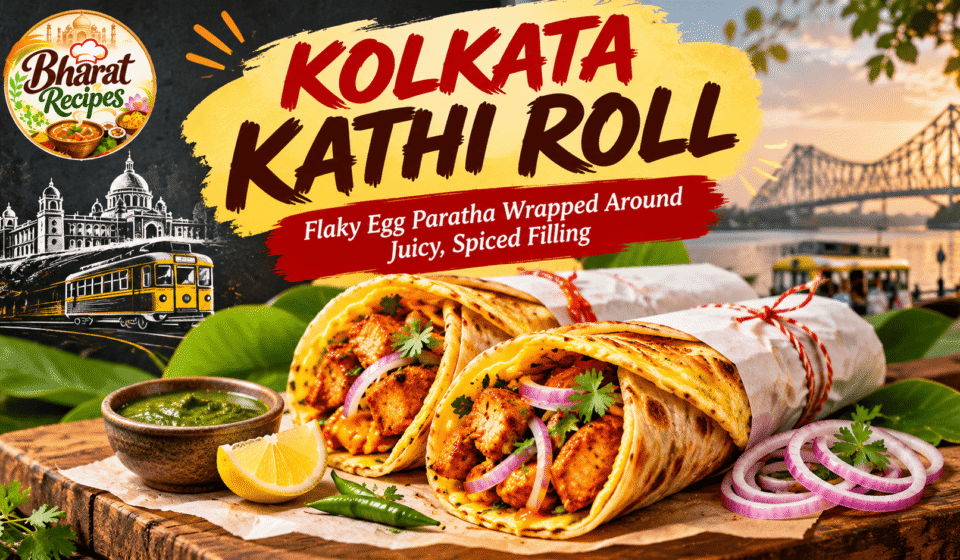
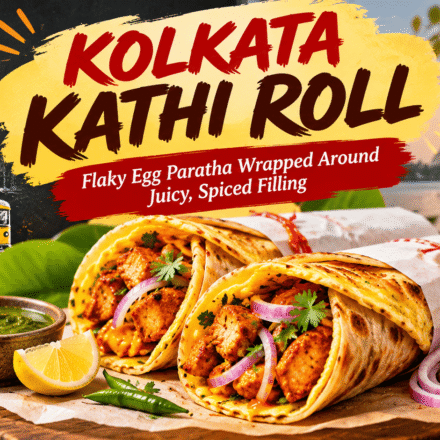
A Kolkata Kathi Roll is one of India’s most loved street foods. It brings together a flaky, golden paratha, juicy spiced filling, sliced onions, green chillies and a squeeze of lemon. Some versions include an egg cooked directly onto the paratha, giving the bread a soft, rich layer that holds everything together.
The first bite delivers several flavours at once. The paratha is crisp around the edges, the filling is savoury and spicy, and the onions add a fresh crunch. A little lemon juice brings everything into balance. Wrapped in paper and served hot, it is an easy meal to enjoy while walking through a busy market or sitting at home.
Kolkata’s kathi roll has a story connected with the city’s food culture and changing eating habits. It is commonly associated with Nizam’s near New Market, where kebabs and parathas became a convenient wrapped meal. Over time, the roll grew beyond its original meat filling. Today, chicken, egg, paneer, potato and mixed vegetable versions are enjoyed across India.
This recipe brings the familiar Kolkata-style experience into your kitchen. It includes a homemade paratha, an egg layer, spiced chicken filling and the classic onion-chilli-lemon combination. You will also find an easy paneer alternative, so everyone can enjoy a version of this popular street food.
Table of Contents
- What Makes Kolkata Kathi Roll Special?
- The Story Behind Kolkata’s Famous Kathi Roll
- Kolkata Kathi Roll vs Other Indian Rolls
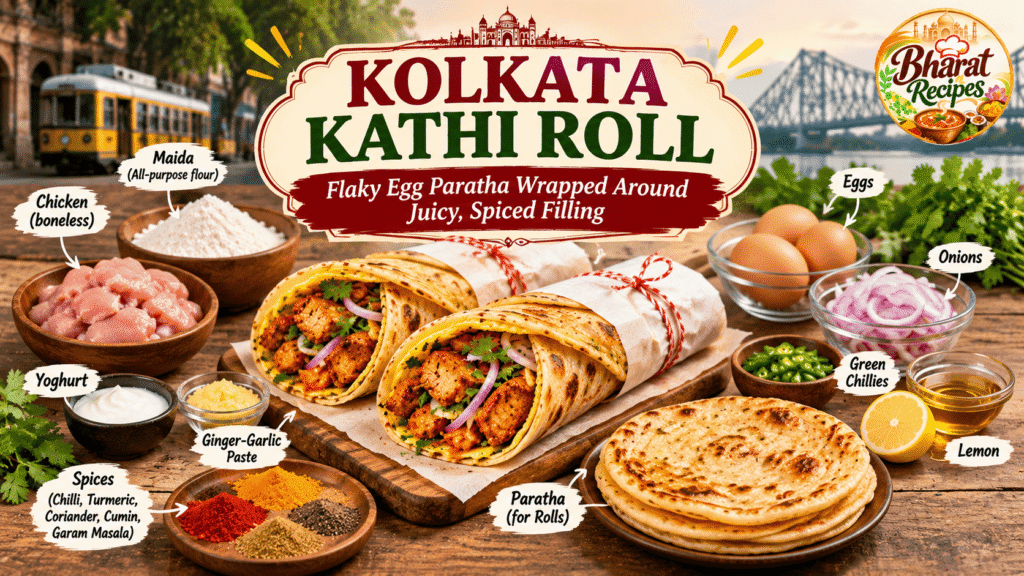
- Ingredients for Kolkata Chicken Kathi Roll
- How to Make the Chicken Filling
- How to Make Flaky Kathi Roll Parathas
- How to Make the Egg Layer
- How to Assemble Kolkata Kathi Rolls
- Vegetarian Paneer Kathi Roll
- Tips for Street-Style Kolkata Kathi Rolls
- Common Mistakes and How to Avoid Them
- Delicious Kathi Roll Variations
- What to Serve with Kathi Rolls
- Storage and Reheating Instructions
- Are Kolkata Kathi Rolls a Healthy Choice?
- Frequently Asked Questions
- Bring Kolkata’s Street Food Flavours to Your Kitchen
What Makes Kolkata Kathi Roll Special?
A Kolkata Kathi Roll is not simply a filling wrapped in flatbread. Its character comes from the way the paratha, filling and fresh toppings work together. Each part adds a different texture and flavour, creating a street-food experience that is both simple and satisfying. The paratha is usually made with refined flour and cooked on a hot tawa with oil or ghee. It develops a golden surface with lightly crisp edges. Many popular versions include an egg layer, which is cooked against the paratha and becomes part of the wrap.
The filling can be made with grilled kebab pieces, chicken, mutton, paneer or vegetables. Meat versions often use ginger, garlic, yoghurt, chilli and aromatic spices. The filling should be juicy and well-seasoned without becoming too wet.
Fresh toppings are just as important. Thinly sliced onions, green chillies and lemon juice provide crunch, heat and acidity. Some stalls add cucumber, coriander, chutney or a little tomato sauce, although the exact combination varies. Finally, the roll is wrapped tightly in paper. This makes it easy to hold and keeps the filling in place. That simple serving style is one reason the kathi roll became such a popular grab-and-go meal.
The Story Behind Kolkata’s Famous Kathi Roll
Kolkata has a long and varied food culture, shaped by local Bengali cooking, Mughlai influences and other culinary traditions. The kathi roll is a memorable example of how different food habits can come together to create something new.
The dish is widely associated with Nizam’s, a restaurant near New Market in Kolkata. The establishment is commonly dated to 1932. It was known for kebabs and parathas, which customers could order separately. According to the popular origin story, wrapping kebabs inside a paratha made the meal easier to eat while travelling or during a busy working day. The story is often linked with customers who did not want to handle oily kebabs directly, although the exact circumstances are not firmly documented.
The name also has a connection with the way the kebabs were cooked. The Bengali word kathi means a stick. Accounts of the restaurant’s history describe a change from heavy iron skewers to lighter bamboo sticks during the 1960s. The name kathi roll became closely connected with this style of kebab and paratha.
As the roll became popular, street vendors and restaurants created their own versions. Egg was added to the paratha, while chicken, paneer and other fillings gave customers more choices. The original idea remained simple: place a well-seasoned filling inside a hot flatbread and make it easy to carry. Today, Kolkata Kathi Rolls are enjoyed far beyond the city. They have become a familiar part of India’s street-food scene, with each region adding its own touch. However, the combination of flaky paratha, spiced filling, onion, chilli and lemon remains strongly associated with the Kolkata style.
Kolkata Kathi Roll vs Other Indian Rolls
Indian food stalls serve many kinds of rolls and wraps. Some use roomali roti, some use chapati, and others use paratha. Although these dishes may look similar, their fillings, breads and seasoning can be quite different. A Kolkata Kathi Roll is particularly known for its paratha. The bread is cooked on a tawa and may carry a layer of egg. The filling is often made from kebab-style meat or other spiced ingredients. Fresh onion, green chilli and lemon are familiar additions.
A regular paneer roll may use a simple chapati or paratha with sautéed paneer and vegetables. A frankie, commonly associated with Mumbai, often includes a spiced filling and chutneys, with its own distinctive seasoning and wrapping style. The Delhi-style roll scene also includes a wide range of kebab and paneer wraps. Some versions use roomali roti or other soft flatbreads. These are delicious in their own right, but they do not necessarily follow the Kolkata method.
For this recipe, the focus is on the Kolkata combination: a flaky paratha, optional egg coating, juicy filling and fresh toppings. The method is easy to adapt without losing the main character of the dish.
Ingredients for Kolkata Chicken Kathi Roll
This recipe makes approximately six medium-sized rolls and serves three to four people, depending on appetite.
For the chicken filling
- 500 g boneless chicken, preferably thighs
- 3 tablespoons plain yoghurt
- 1 tablespoon ginger-garlic paste
- 1 tablespoon mustard oil or regular cooking oil
- 1 teaspoon Kashmiri red chilli powder
- ½ teaspoon turmeric powder
- 1 teaspoon coriander powder
- ½ teaspoon cumin powder
- ½ teaspoon garam masala
- ½ teaspoon black pepper powder
- 1 tablespoon lemon juice
- Salt to taste
cooking the chicken
- 1 tablespoon oil
- 1 small onion, thinly sliced
- 1 green chilli, finely chopped
- ½ teaspoon cumin seeds
- 1 tablespoon chopped coriander leaves
- ½ teaspoon chaat masala, optional
the paratha dough
- 2 cups all-purpose flour or maida
- ½ teaspoon salt
- ½ teaspoon sugar
- 2 tablespoons oil or ghee
- Water as needed
- Extra flour for rolling
- Oil or ghee for cooking
For the egg layer
- 6 eggs
- A pinch of salt
- A pinch of black pepper
- 1 teaspoon oil for each paratha, as needed
For the fresh topping
- 2 medium onions, thinly sliced
- 2 green chillies, finely chopped or sliced
- 1 small cucumber, cut into thin strips, optional
- 1 lemon, cut into wedges
- 2 tablespoons chopped coriander leaves
- Chaat masala to taste
- Green chutney or tomato sauce, optional
Use chicken thighs if you want a juicier filling. Chicken breast also works, but it can become dry if cooked for too long.
How to Make the Chicken Filling
The filling should be well-seasoned and tender. Give the chicken enough time to absorb the marinade, then cook it over medium heat until fully done. Avoid adding too much water because a wet filling can make the paratha soggy.
Step 1: Prepare the chicken
Cut the chicken into small, even pieces. Smaller pieces are easier to distribute inside the roll and cook more evenly.
Place the chicken in a mixing bowl. Add yoghurt, ginger-garlic paste, mustard oil, Kashmiri chilli powder, turmeric, coriander powder, cumin powder, garam masala, black pepper, lemon juice and salt. Mix well until every piece is coated. Cover the bowl and refrigerate for at least 30 minutes. If you have more time, marinate it for one to two hours. Keep raw chicken refrigerated while it marinates.
Step 2: Cook the chicken
Heat oil in a heavy pan or kadai. Add the marinated chicken and spread it into an even layer. Let it cook for a few minutes before stirring. Cook over medium heat, turning the pieces occasionally. The yoghurt marinade will release moisture at first. Continue cooking until the chicken is tender and the liquid reduces.
Check the thickest pieces to make sure the chicken is fully cooked. If you use a food thermometer, the centre should reach 74°C. Avoid relying only on the colour of the outside.
Step 3: Add the onion and spices
In a separate pan, heat a little oil. Add cumin seeds and let them crackle. Add the sliced onion and cook until it softens and turns lightly golden.Now add chopped green chilli and the cooked chicken. Toss everything together so the onion and spices coat the chicken evenly.
Sprinkle chaat masala and chopped coriander leaves. Taste and adjust the salt or lemon juice if required. The filling should be savoury, slightly tangy and aromatic.
Step 4: Keep the filling ready
Remove the pan from the heat. If the chicken pieces are large, cut them into smaller strips or bite-sized pieces.
Keep the filling warm while you prepare the parathas. If you are making several rolls, avoid assembling them too early. Freshly cooked parathas hold their texture better.
How to Make Flaky Kathi Roll Parathas
The paratha is one of the most important parts of a Kolkata Kathi Roll. It needs to be flexible enough to wrap around the filling but crisp enough to hold its shape. A soft dough and careful cooking help achieve that balance.
Step 1: Prepare the dough
Add flour, salt and sugar to a large bowl. Mix them together. Add oil or ghee and rub it into the flour with your fingertips.
Gradually add water and knead until you get a smooth, soft dough. It should not be sticky or too firm. Cover it with a damp cloth and let it rest for 20–30 minutes.
Step 2: Divide the dough
After resting, knead the dough briefly. Divide it into six equal portions and shape each portion into a smooth ball. Keep the dough balls covered while you roll them. This prevents the surface from drying out and makes them easier to work with.
Step 3: Roll out the parathas
Dust the rolling surface with a little flour. Roll one dough ball into a thin circle, roughly 7–8 inches wide.
Brush the surface lightly with oil or ghee. Fold it into a loose square or roll it into a coil before flattening it again. This simple layering method helps create a flaky texture.
Roll it gently into a round or slightly oval paratha. Do not press too hard, as that can flatten the layers.
Step 4: Cook on a tawa
Heat a tawa over medium heat. Place the rolled paratha on the hot surface. Cook until small bubbles appear and the underside develops light brown spots.
Flip it and brush a little oil or ghee around the edges. Cook the second side until golden. Turn once more if needed, pressing gently with a spatula. The paratha should be cooked through but remain flexible. Do not make it too crisp, or it may crack while rolling. Transfer it to a plate and cover it with a clean cloth. Repeat with the remaining dough portions.
How to Make the Egg Layer
The egg paratha is a familiar feature of many Kolkata-style rolls. The egg cooks directly against the flatbread, adding flavour and helping create a rich, soft layer.
Step 1: Beat the eggs
Break one egg into a small bowl. Add a pinch of salt and black pepper. Beat lightly with a fork until the white and yolk are combined.
Prepare each egg separately or beat them all together in a larger bowl. If you beat them together, use roughly one egg per roll.
Step 2: Cook the egg
Heat a flat tawa or frying pan over medium heat. Add a little oil and spread it across the surface.
Pour the beaten egg onto the pan and swirl it gently into a thin circle. Before it sets completely, place a cooked paratha over the egg. Press the paratha lightly so the egg sticks to its underside. Allow the egg to cook, then flip the paratha carefully. Cook for a few more seconds until the egg is fully set.
Transfer the egg paratha to a plate with the egg side facing up. Repeat for the remaining rolls. If you prefer an egg-free version, skip this step. The roll will still taste delicious with a plain paratha.
How to Assemble Kolkata Kathi Rolls
Assemble the rolls while the parathas and filling are still warm. This keeps the bread flexible and makes the filling easier to spread.
Step 1: Prepare the onion mixture
Place the sliced onions in a bowl. Add chopped green chillies, coriander leaves and a squeeze of lemon juice.
Sprinkle a little salt and chaat masala. Mix gently and let the onions rest for five minutes. This gives them a light tang without making them too soft.
Step 2: Place the filling
Lay one egg paratha on a clean board or plate with the egg side facing up. Place a line of warm chicken filling across the centre, leaving space at both ends.
Do not overfill the paratha. Too much filling makes the roll difficult to close and can cause it to tear.
Step 3: Add the fresh toppings
Add the onion mixture over the chicken. Include a few cucumber strips if you like extra crunch.
Squeeze a little lemon juice over the filling. Add a small amount of green chutney or tomato sauce if desired. Keep the sauce light so the roll does not become wet.
Step 4: Roll tightly
Fold the bottom edge of the paratha over the filling. Bring one side across and roll it firmly towards the other side.
Keep the filling tucked inside as you roll. Wrap the lower half with butter paper or food-safe wrapping paper so the roll is easy to hold.
Serve immediately while the paratha is warm and the filling is juicy.
Vegetarian Paneer Kathi Roll
A paneer kathi roll is a satisfying vegetarian alternative. It keeps the familiar paratha, egg option and fresh toppings but replaces the chicken with spiced paneer.
Ingredients for paneer filling
- 300 g paneer, cut into strips
- 3 tablespoons plain yoghurt
- 1 teaspoon ginger-garlic paste
- ½ teaspoon Kashmiri red chilli powder
- ½ teaspoon coriander powder
- ½ teaspoon cumin powder
- ¼ teaspoon turmeric powder
- ½ teaspoon garam masala
- 1 teaspoon lemon juice
- 1 tablespoon oil
- Salt to taste
- 1 small onion, sliced
- 1 small capsicum, sliced
- 1 tablespoon chopped coriander leaves
Method
Mix yoghurt, ginger-garlic paste, chilli powder, coriander powder, cumin powder, turmeric, garam masala, lemon juice and salt in a bowl. Add the paneer strips and coat them gently.
Let the paneer marinate for 15–20 minutes. Avoid mixing too aggressively because paneer can break.
Heat oil in a pan. Add sliced onion and capsicum and cook until they soften slightly but retain some crunch. Add the marinated paneer and cook over medium heat until the outside turns lightly golden.
Finish with chopped coriander and a little chaat masala. Taste and adjust the seasoning.
Prepare the paratha and egg layer using the same method. For an egg-free vegetarian roll, simply use a plain paratha. Add the paneer filling, sliced onions, green chillies and lemon juice. Roll tightly and serve hot.
Tips for Street-Style Kolkata Kathi Rolls
A few practical details can make homemade rolls taste closer to the ones served at busy Kolkata food stalls.
Use a soft dough: A firm dough produces a stiff paratha that can crack while rolling. Knead until smooth and allow it to rest before shaping.
Keep the paratha flexible: Cook it until golden, but do not make it too crisp. It should bend without breaking.
Marinate the chicken: Yoghurt, ginger, garlic and spices help flavour the meat. Even a short resting period makes a difference.
Cut the filling into small pieces: Smaller pieces spread evenly across the paratha. They also make the roll easier to eat.
Use fresh onions: Thinly sliced onions provide the crunch and sharpness that balance the rich filling.
Add lemon at the end: Fresh lemon juice brightens the roll. Add it just before serving rather than mixing too much into the filling.
Avoid excess sauce: Too much chutney or tomato sauce can overpower the kebab-style flavour and soften the paratha.
Wrap in paper: Paper wrapping makes the roll easier to hold and helps keep the filling together. Use food-safe wrapping paper.
Common Mistakes and How to Avoid Them
The paratha becomes hard
This usually happens when the dough is too firm or the paratha is cooked for too long. Add water gradually while kneading and keep the heat at medium. Remove the paratha once it is cooked and lightly golden.
The paratha tears while rolling
The dough may be too dry, or the paratha may have become too crisp. Rest the dough properly and avoid overcooking the bread. If the paratha tears during assembly, reduce the filling and roll more gently.
The chicken filling becomes dry
Chicken breast can dry out quickly if overcooked. Chicken thighs are a useful alternative because they usually remain juicier. Cook the meat until done, then remove it from the heat rather than leaving it in the pan.
The filling tastes bland
The chicken may not have had enough time to absorb the marinade, or the seasoning may be too mild. Taste the cooked filling before assembling the rolls. Adjust the salt, lemon juice, chilli or chaat masala as needed.
The roll becomes soggy
This often happens when the filling contains too much liquid or the onions and chutney are added too early. Reduce the chicken cooking liquid before assembling. Add the fresh toppings just before rolling.
The egg layer sticks to the pan
The tawa may not be properly heated, or there may not be enough oil. Use a clean, lightly greased pan and spread the beaten egg into a thin layer. Place the paratha over it before the egg becomes completely dry.
The roll opens after wrapping
The paratha may be overfilled or rolled too loosely. Keep the filling in a narrow line and fold the lower edge over it before rolling. Wrap the bottom half with paper to help hold the shape.
Delicious Kathi Roll Variations
Kathi rolls are easy to adapt. You can change the filling, add vegetables or adjust the spice level while keeping the familiar paratha-and-topping combination.
Egg Kathi Roll
Skip the chicken or paneer and use a well-seasoned egg filling. You can prepare a thin omelette with onion, green chilli, coriander and black pepper. Place it inside an egg paratha or a plain paratha for a simple, filling snack.
Mutton Kathi Roll
Use boneless mutton pieces marinated with yoghurt, ginger-garlic paste, chilli, cumin, coriander and garam masala. Cook them until tender before placing them inside the paratha.
Mutton takes longer to cook than chicken. Use a pressure cooker or slow-cooking method if needed, then reduce the gravy before assembling the rolls.
Aloo Kathi Roll
Boil and mash potatoes. Add cumin, coriander powder, chilli, garam masala, chopped green chillies and fresh coriander. Cook the mixture briefly until it becomes fairly dry.
Spread the potato filling across a plain or egg paratha. Add sliced onions and lemon juice for a simple vegetarian roll.
Mixed Vegetable Kathi Roll
Sauté sliced carrots, capsicum, cabbage, beans and onions with cumin and spices. Cook until the vegetables soften slightly but retain some texture.
Add paneer if you want a richer filling. This version works well for lunchboxes when wrapped properly and allowed to cool before packing.
Mushroom Kathi Roll
Slice mushrooms and cook them with onion, ginger, garlic, black pepper, chilli and coriander powder. Let the moisture evaporate so the filling stays dry enough for wrapping.
Finish with lemon juice and coriander. Mushrooms bring a deep savoury flavour and work well with an egg or plain paratha.
Cheese Kathi Roll
Add a small amount of grated cheese to a hot paneer or vegetable filling. The cheese melts and gives the roll a richer texture.
Use it sparingly so it does not overpower the other ingredients. Fresh onion and lemon help balance the richness.
What to Serve with Kathi Rolls
A Kolkata Kathi Roll is filling enough to serve on its own. However, a few simple sides can turn it into a more complete meal.
Green chutney is a popular accompaniment. Its fresh coriander, mint and chilli flavours work well with the warm filling. You can also serve a small bowl of tamarind chutney for a sweet-and-sour touch.
A simple onion salad is another good choice. Mix sliced onions with lemon juice, salt and chopped coriander. Add cucumber if you want extra freshness.
For a more substantial meal, serve the rolls with a light vegetable salad or a bowl of plain yoghurt. A chilled lemonade or salted chaas can also balance the spices.
If you are serving guests, cut each roll in half and arrange the pieces on a platter. Keep the paper wrapping around the lower half to make them easier to hold. Serve the chutneys separately so the parathas remain crisp.
Storage and Reheating Instructions
Kathi rolls taste best when freshly assembled. However, you can prepare some parts ahead to make serving easier.
Storing the chicken filling
Allow the cooked chicken filling to cool before placing it in an airtight container. Refrigerate it promptly and use it within three to four days.
Reheat it in a pan over medium heat until piping hot throughout. Add a small splash of water if it has become too dry, but let the extra moisture cook off before assembling the rolls.
You can freeze the cooked chicken filling in meal-sized portions. For best quality, use it within about two months. Thaw it in the refrigerator before reheating.
Storing the parathas
Cook the parathas and allow them to cool completely. Stack them with baking paper between each one and store them in an airtight container.
Refrigerate for up to two days for the best texture. Reheat each paratha on a tawa until warm and flexible. Add the egg layer after reheating if you want a freshly made egg roll.
You can also freeze plain cooked parathas with baking paper between them. Reheat them on a tawa without fully thawing, turning until hot.
Storing assembled rolls
It is better to avoid storing fully assembled rolls for long periods. The onions and sauces release moisture, which can make the paratha soggy. If you need to pack a roll for later, let the filling cool slightly before assembling. Keep wet sauces separate and add lemon just before eating. Refrigerate the prepared roll if it contains chicken or egg, and do not leave it at room temperature for extended periods.
Are Kolkata Kathi Rolls a Healthy Choice?
A Kathi Roll can be part of a balanced meal, but its nutritional value depends on the filling, bread and cooking fat. Chicken provides protein, while paneer offers protein and calcium. Vegetables add fibre and a range of nutrients.
The paratha provides carbohydrates and energy. However, refined flour and generous amounts of oil or ghee can increase the meal’s overall calorie content. Cheese, creamy sauces and large portions can make it even richer.
You can make a lighter version at home without losing the main flavours. Use less oil when cooking the paratha, choose a grilled or pan-cooked filling, and add plenty of fresh onions and vegetables. You can also replace some of the refined flour with whole wheat flour.
Choose plain yoghurt or mint chutney instead of heavy sauces. Keep the portion size comfortable and serve the roll with a fresh salad if you want a more balanced meal.
Frequently Asked Questions
1. What is a Kolkata Kathi Roll?
A Kolkata Kathi Roll is a street-food wrap made with a paratha and a savoury filling. The filling may include kebab meat, chicken, egg, paneer or vegetables. It is commonly served with sliced onions, green chillies and lemon juice.
2. Why is it called a Kathi Roll?
The word kathi means stick in Bengali. The name is commonly linked with bamboo skewers used to cook kebabs. The roll became associated with the kebabs and parathas served together in Kolkata.
3. Where did the Kathi Roll originate?
The kathi roll is widely associated with Nizam’s near New Market in Kolkata. The restaurant is commonly credited with popularising the idea of wrapping kebabs in paratha. The exact details of its origin are based partly on popular accounts rather than a fully documented record.
4. Is an egg necessary for a Kolkata Kathi Roll?
No. Egg is common in many Kolkata-style rolls, but it is optional. You can make the roll with a plain paratha and your choice of filling.
5. Which paratha is best for a Kathi Roll?
A thin, flaky paratha made with refined flour is a familiar choice. It should be flexible enough to wrap around the filling without breaking. You can also use a mixture of refined flour and whole wheat flour.
6. Can I make Kathi Rolls without maida?
Yes. Replace some or all of the refined flour with whole wheat flour. The texture will be slightly denser, but the rolls can still taste good. Add water gradually and rest the dough before rolling.
7. How do I keep the paratha soft?
Knead a soft dough, allow it to rest and avoid cooking the paratha for too long. Keep the cooked parathas covered with a clean cloth until you assemble the rolls.
8. Can I prepare Kathi Rolls in advance?
You can prepare the filling and dough ahead of time. Store the cooked filling in the refrigerator and roll out the parathas shortly before serving. Assemble the rolls just before eating for the best texture.
9. What is the best vegetarian filling for a Kathi Roll?
Paneer, potato, mushroom and mixed vegetables are all good choices. Paneer is especially popular because it holds its shape during cooking and absorbs the marinade well.
10. Can I use leftover chicken?
Yes. Shred or cut the cooked chicken into small pieces. Toss it with a little onion, chilli, cumin, coriander and garam masala in a pan. Heat it thoroughly before adding it to the paratha.
11. What makes a Kathi Roll different from a regular wrap?
A Kolkata Kathi Roll is closely associated with its flaky paratha, kebab-style filling and fresh onion-chilli-lemon topping. Many regular wraps use softer flatbreads and different fillings or sauces.
12. How do I stop the roll from becoming soggy?
Cook the filling until excess liquid evaporates. Add onions, chutney and lemon shortly before serving. Avoid using too much sauce, and do not wrap the roll while the filling is dripping with liquid.
Bring Kolkata’s Street Food Flavours to Your Kitchen
Kolkata Kathi Rolls show how a few familiar ingredients can create a memorable meal. A flaky paratha, well-seasoned filling, fresh onions, green chillies and lemon come together in a simple wrap that is easy to enjoy at any time of day.
The homemade version gives you room to choose your favourite filling. Make it with chicken for a classic kebab-style meal, or try paneer, potato and vegetables for a vegetarian option. Adjust the chilli and chutney to suit your taste.
For the best results, prepare the filling ahead but cook the parathas and assemble the rolls just before serving. Wrap them in paper, serve them hot and enjoy a little taste of Kolkata’s famous street food at home.
Bharat Recipes celebrates Indian flavours, one memorable meal at a time.







[…] Chettinad Chicken Curry a Healthy […]
[…] to Get the Street-Style Taste […]