
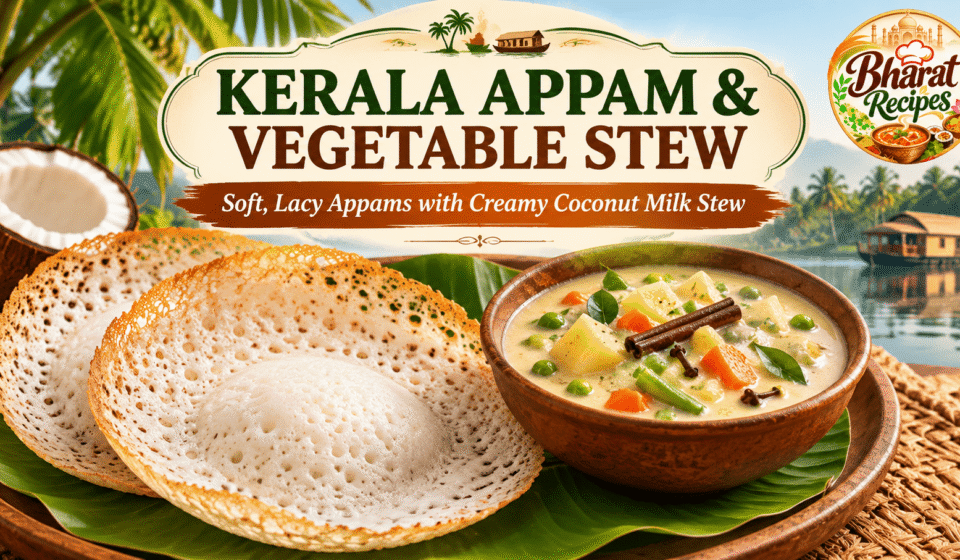
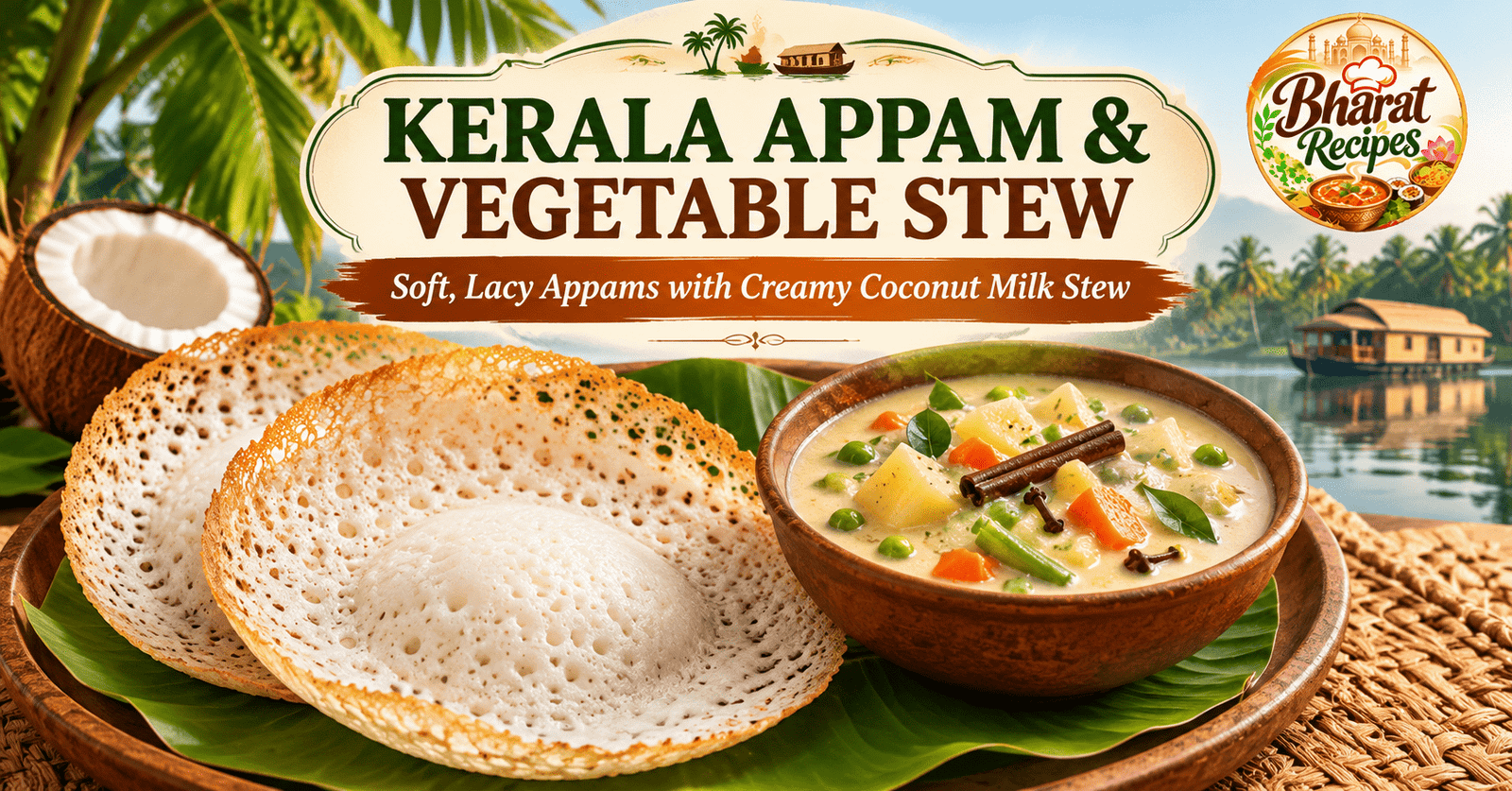
Kerala Appam and Vegetable Stew Recipe: Authentic Kerala Breakfast
Kerala Appam and Vegetable Stew: The Soft, Lacy Breakfast That Brings the Taste of God’s Own Country Home
Recipe details: Serves 4–5 | Makes approximately 10–12 appams | Preparation: 30 minutes | Soaking: 4–5 hours | Fermentation: 6–8 hours | Cooking: 35–40 minutes | Difficulty: Moderate
Table of Contents
- The Kerala Breakfast That Makes Every Morning Special
- What Makes Kerala Appam and Vegetable Stew Special?
- A Taste of Kerala’s Food Traditions
- Understanding Appam: The Soft Centre and Crispy Edges
- Ingredients Required for Kerala Appam
- How to Prepare Appam Batter
- The Secret Behind Perfectly Fermented Appam Batter
- How to Make Soft and Lacy Kerala Appam
- Ingredients Required for Kerala Vegetable Stew
- Preparing the Vegetables and Coconut Milk
- How to Make Kerala Vegetable Stew
- How to Get the Right Coconut Milk Consistency
- How to Serve Appam and Vegetable Stew
- Common Mistakes to Avoid
- Popular Appam and Stew Variations
- How to Store and Reheat Appam and Stew
- Frequently Asked Questions
- Bring the Flavours of Kerala to Your Kitchen
The Kerala Breakfast That Makes Every Morning Special
Some breakfasts are filling, while others offer a combination of taste, aroma and comfort. Kerala Appam and Vegetable Stew brings all three together. The appam has a soft, spongy centre and delicate edges that turn lightly crisp during cooking. Alongside it, a mild vegetable stew adds creamy coconut flavour, gentle spices and the freshness of curry leaves.
This combination is one of the most recognisable food pairings associated with Kerala. You will find different versions in homes, restaurants and traditional breakfast menus across the state. Some families serve appam with vegetable stew, while others prefer chicken or mutton stew. However, the vegetarian version remains a wonderful choice for anyone who enjoys coconut-based food.
The beauty of this meal lies in its balance. Appam has a mild flavour, so it works well with a stew that contains vegetables, coconut milk and aromatic whole spices. The curry does not depend on heavy chilli powder or a thick tomato base. Instead, ginger, green chillies, cardamom, cinnamon and curry leaves create a gentle fragrance that complements the rice pancake.
Although appam may look difficult to prepare, the process becomes easier once you understand the batter. You need to soak and grind rice, add coconut and allow the mixture to ferment. After that, cooking each appam takes only a few minutes. The vegetable stew is even simpler because you cook the vegetables in a lightly seasoned coconut milk base.
This recipe brings both dishes together in a practical home-kitchen format. You will learn how to prepare the batter, manage fermentation, create the familiar bowl-shaped appam and cook a creamy vegetable stew. You will also find tips for making the recipe with packaged coconut milk and ordinary kitchen equipment.
What Makes Kerala Appam and Vegetable Stew Special?
Appam and vegetable stew stand out because of their simple ingredients and contrasting textures. Appam uses rice as its main ingredient, with coconut adding softness and a mild flavour. Fermentation helps the batter develop its characteristic texture. When you pour the batter into a hot appam pan and swirl it around, the thinner portion moves towards the edges while the thicker portion stays in the centre.
The vegetable stew uses a different approach. Instead of relying on a thick roasted masala, it combines vegetables with coconut milk and a small selection of whole spices. Potatoes provide body, while carrots, beans and peas add colour and texture. Ginger, green chillies and curry leaves give the stew its gentle flavour.
Coconut plays an important role in both preparations. It adds a familiar taste associated with Kerala cooking and helps connect the two dishes. In the appam batter, grated coconut or coconut milk contributes to the soft texture. In the stew, coconut milk forms the creamy base and carries the aroma of the spices.
Another reason this combination works so well is its versatility. You can serve it for breakfast, brunch or dinner. It also suits family gatherings because you can prepare the batter and vegetables in advance. Once the batter has fermented, cooking fresh appams takes very little time.
A Taste of Kerala’s Food Traditions
Kerala’s food culture reflects its coastal geography, tropical climate and long history of trade and cultural exchange. Rice, coconut, seafood, vegetables and spices form an important part of many regional meals. The state’s cooking also varies between districts and communities, so a dish may have several household versions rather than one fixed recipe.
Appam is especially familiar in Kerala’s breakfast and meal traditions. It is often paired with vegetable stew, chicken stew, mutton stew or other curries. Kerala Tourism features appam with both chicken and mutton stew among its regional food preparations, describing the pancake’s soft centre and delicate edges.
The vegetable stew commonly served with appam is also known as ishtu or ishtew. It is a mild preparation in which vegetables cook with whole spices, ginger, green chillies and coconut milk. Different households may use potatoes, carrots, beans, peas or other available vegetables. Some cooks prepare fresh coconut milk at home, while others use packaged coconut milk for convenience.
The appam and stew combination is enjoyed in different parts of Kerala, including homes and restaurants that serve traditional breakfasts. However, the exact recipe can change from one family to another. Some appam batters use yeast, while others rely on traditional fermentation methods. Some stews are very light, while others have a thicker coconut milk base.
This variation is part of what makes Kerala food interesting. You can follow a familiar preparation while adjusting the seasoning and ingredients to suit your household. The important thing is to preserve the soft appam texture and the gentle coconut flavour of the stew.
Understanding Appam: The Soft Centre and Crispy Edges
Appam is a fermented rice pancake traditionally cooked in a small, deep pan called an appachatti or appam pan. The batter spreads towards the sides when you swirl the pan, creating a thin outer layer and a thicker centre. Once covered, the appam cooks through and develops a soft, spongy middle. The edges become lighter and slightly crisp.
The shape is one of the easiest ways to recognise appam. Unlike a regular dosa, which spreads across a flat griddle, appam forms a shallow bowl. The centre holds more batter, while the edges remain thin. This structure makes it ideal for serving with coconut milk-based curries because the soft centre absorbs the stew.
Traditional appam batter can be prepared in different ways. Some methods use soaked raw rice, grated coconut and cooked rice, while others use rice flour and coconut milk. Yeast is a convenient fermentation aid in many home recipes. Kerala Tourism also publishes an appam method using rice, coconut, cooked rice, sugar and yeast.
For this recipe, we will use soaked raw rice, grated coconut, cooked rice and a small amount of yeast. This method produces a batter that is suitable for home cooking and does not require specialised ingredients. You can also use a non-stick appam pan if you do not own a traditional appachatti.
Ingredients Required for Kerala Appam
The appam batter needs only a few basic ingredients. Rice provides the main structure, while coconut and cooked rice help create a soft centre. Yeast supports fermentation and makes the process easier to manage in a home kitchen. Measure the ingredients carefully because too much water or an incorrect rice-to-coconut balance can affect the batter.
Ingredients for approximately 10–12 appams
- 2 cups raw rice, preferably a suitable short- or medium-grain variety
- ½ cup freshly grated coconut
- ¼ cup cooked rice
- ½ teaspoon dry yeast
- 1 teaspoon sugar
- Salt to taste
- Water as required for soaking and grinding
- A little oil for greasing the appam pan
Optional ingredients
- 2 tablespoons coconut milk for extra flavour
- A small pinch of sugar for a slightly sweeter appam
- A little extra cooked rice if the batter needs a softer texture
Use fresh coconut if possible because it gives the batter a pleasant aroma. Frozen grated coconut can also work after thawing. Avoid using sweetened desiccated coconut because it may change the taste and texture.
You can use ordinary raw rice available in Indian grocery stores. However, the water absorption and grinding time may vary depending on the variety. Choose rice that you can grind into a smooth batter after soaking. Wash it properly before soaking so that excess surface starch and dust do not remain in the mixture.
How to Prepare Appam Batter
The batter is the foundation of good appam. It should be smooth, pourable and thick enough to coat the sides of the pan without becoming watery. Take enough time to soak and grind the rice properly. A rushed batter may produce appams that are dense in the centre or difficult to spread.
Step 1: Wash and soak the rice
Measure two cups of raw rice and place them in a large bowl. Wash the rice two or three times with fresh water until the water becomes clearer. Add enough water to cover the rice completely and leave it to soak for approximately 4–5 hours. Soaking softens the grains and makes grinding easier.
Step 2: Prepare the yeast mixture
Take the dry yeast in a small bowl and add one teaspoon of sugar. Pour in a few tablespoons of lukewarm water and stir gently. Leave it for around 5–10 minutes until it becomes slightly foamy. The water should feel comfortably warm, not hot, because excessive heat can damage the yeast.
Step 3: Grind the rice
Drain the soaked rice and transfer it to a mixer or wet grinder. Add the grated coconut and cooked rice. Grind in batches, adding small amounts of water as required. Continue until the mixture becomes smooth and has no large rice particles.
Step 4: Add the yeast
Transfer the ground batter to a large bowl. Add the prepared yeast mixture and stir thoroughly. Add salt and mix again. The batter should have a consistency similar to a thick but pourable pancake batter.
Step 5: Adjust the consistency
Check the batter before fermentation. If it feels too thick, add a little water and mix. If it looks very thin, allow it to settle briefly and check again before adding anything else. Remember that the batter may change slightly during fermentation.
Step 6: Cover and ferment
Cover the bowl loosely with a lid or clean cloth. Leave it in a warm place for approximately 6–8 hours, depending on the room temperature and yeast activity. The batter should become slightly risen and bubbly. In cooler weather, fermentation may take longer.
Do not fill the bowl completely because the batter may rise during fermentation. Leave enough space at the top. Once fermentation is complete, stir the batter gently and check its consistency before making the appams.
The Secret Behind Perfectly Fermented Appam Batter
Fermentation is one of the most important stages of appam preparation. It helps create the light texture that separates appam from an ordinary rice pancake. When the batter ferments properly, it develops small air bubbles and becomes slightly lighter. These bubbles help create the soft centre and delicate edges during cooking.
Temperature has a direct effect on fermentation time. In a warm Indian kitchen, the batter may ferment within six hours. During colder weather, it may need more time. Do not rely only on a fixed clock because the activity of the yeast and the temperature of the room can vary.
A properly fermented batter should look slightly risen and contain small bubbles. It may also develop a mild fermented aroma. However, it should not smell unpleasant or show signs of spoilage. If you notice unusual colours, mould or a rotten smell, discard the batter rather than trying to use it.
If the batter does not rise, check whether the yeast was fresh and whether the water used to activate it was too hot. Old yeast may not work properly. Very cold conditions can also slow fermentation. In that situation, move the covered bowl to a warmer place and allow it more time.
Avoid placing the batter directly next to a hot stove or in strong sunlight. Excessive heat can damage the mixture and cause uneven fermentation. A warm corner of the kitchen is usually sufficient. You can also use an oven with only its light switched on, provided the temperature remains suitable and the oven is not heated.
How to Make Soft and Lacy Kerala Appam
Once the batter has fermented, you can start making fresh appams. A traditional appachatti makes it easier to achieve the familiar bowl shape, but a small non-stick pan with sloping sides can also work. The important part is to spread the batter evenly while leaving enough mixture in the centre.
Step 1: Prepare the appam pan
Place the appam pan over medium-low heat. If it is a traditional pan, lightly grease the surface with a little oil. A non-stick pan may need very little oil. Avoid heating it for too long before adding the batter.
Step 2: Check the batter
Stir the fermented batter gently to distribute the ingredients. If it has become too thick, add a little water and mix again. It should flow easily when poured but should not look as thin as plain water. A smooth, pourable consistency gives the best result.
Step 3: Pour the batter
Take a small ladle of batter and pour it into the centre of the pan. Immediately lift the pan and swirl it in a circular motion so that the batter spreads towards the sides. The movement should create a thin layer around the edges while leaving more batter in the centre.
Step 4: Cover the pan
Place a lid over the appam pan and allow the appam to cook on low to medium-low heat. The steam helps cook the thicker centre while the edges become light and delicate. Avoid lifting the lid repeatedly because that releases steam.
Step 5: Check the appam
The appam is ready when the centre looks cooked and the edges become lightly crisp. The edges may turn pale golden, depending on the pan and heat. You generally do not need to flip a properly prepared appam.
Step 6: Remove and serve
Use a thin spatula to loosen the edges and remove the appam carefully. Place it on a serving plate and repeat the process with the remaining batter. Serve the appams warm with vegetable stew.
The first appam may not look perfect, especially if you are using a new pan. It can help you understand whether the batter is too thick, the pan is too hot or the quantity needs adjustment. Make small corrections before cooking the remaining batch.
Ingredients Required for Kerala Vegetable Stew
Kerala vegetable stew is known for its mild flavour and creamy coconut base. The vegetables should remain soft but not turn into a mashed mixture. Whole spices provide gentle warmth, while ginger, green chillies and curry leaves add freshness. Coconut oil gives the stew a familiar regional aroma.
Ingredients for 4 servings
- 2 medium potatoes, peeled and cubed
- 1 medium carrot, peeled and chopped
- ½ cup green beans, cut into small pieces
- ½ cup green peas, fresh or frozen
- 1 medium onion, thinly sliced
- 1 tablespoon ginger, cut into thin strips
- 2–3 garlic cloves, finely chopped
- 2–3 green chillies, slit lengthwise
- 1 sprig fresh curry leaves
- 1 small cinnamon stick
- 3 green cardamom pods
- 3 cloves
- ½ teaspoon whole black peppercorns, lightly crushed
- 1 tablespoon coconut oil
- Salt to taste
- 1 cup thin coconut milk
- 1 cup thick coconut milk
- ½–1 cup water, as required
Optional ingredients
- A few cashews for a richer variation
- A small pinch of black pepper powder
- A little extra coconut oil for finishing
- Fresh curry leaves for garnish
Potatoes usually provide the main body of the stew. Carrots, beans and peas add colour and variety. You can adjust the vegetable quantities according to what is available, but avoid adding too many vegetables with strong flavours. The mild coconut base should remain noticeable.
Preparing the Vegetables and Coconut Milk
Good preparation makes the cooking process much easier. Wash the vegetables thoroughly and cut them into pieces of similar size. This helps them cook at roughly the same rate. Keep the potatoes slightly larger than the peas because they need more time to become tender.
Slice the onion thinly and cut the ginger into narrow strips. Slit the green chillies lengthwise so that they release flavour without making the stew excessively hot. Keep the garlic chopped and the curry leaves ready. Measure the whole spices before turning on the stove.
Fresh coconut milk offers a pleasant flavour, but packaged coconut milk is a convenient alternative. If you use fresh coconut, you can extract two types of milk. The first extraction is thick and rich, while the second is thinner and more diluted. Use the thinner milk to cook the vegetables and add the thicker milk towards the end.
For this recipe, you can also use packaged coconut milk. Mix one part coconut milk with a little water to create a thinner cooking liquid. Keep another portion undiluted for the final stage. This gives you better control over the consistency and makes the recipe easier to prepare.
Avoid using sweetened coconut milk or coconut cream with added sugar. The stew should taste mildly savoury, with a natural coconut flavour. If the packaged coconut milk is very thick, dilute it slightly before adding it to the vegetables.
How to Make Kerala Vegetable Stew
The stew is easier to prepare than it looks. You begin by gently frying the whole spices, ginger, garlic and onion. The vegetables then cook in thin coconut milk until tender. Finally, you add thick coconut milk and warm the mixture gently without allowing it to boil aggressively.
Step 1: Heat the coconut oil
Place a deep pan or kadai over medium-low heat. Add one tablespoon of coconut oil and allow it to warm. Add the cinnamon, cardamom, cloves and lightly crushed peppercorns. Stir briefly until the spices release their aroma.
Step 2: Add ginger, garlic and green chillies
Add the sliced ginger, chopped garlic and slit green chillies. Stir gently for a short time. Avoid browning the garlic because it can make the stew taste harsh. You only need to release the aroma of the ingredients.
Step 3: Add onions and curry leaves
Add the sliced onion and curry leaves. Cook until the onion becomes soft and translucent. Do not fry it until dark brown because the stew should retain its pale appearance. Stir gently so that the onion cooks evenly.
Step 4: Add the vegetables
Add the potatoes, carrots and beans. Stir for a couple of minutes so that the vegetables receive the flavour of the spices. Add the green peas and mix again. Season with salt and make sure the vegetables are evenly coated.
Step 5: Add thin coconut milk
Pour in the thin coconut milk and enough water to cover the vegetables partially. Stir gently and bring the mixture to a light simmer. Cover the pan and cook until the potatoes and carrots become tender. The cooking time will depend on the size of the vegetable pieces.
Step 6: Check the vegetables
Open the lid and test a potato piece with a fork. It should be soft enough to pierce but should still hold its shape. If the vegetables remain firm, add a little water and continue cooking. Avoid stirring too vigorously because the potatoes can break apart.
Step 7: Add thick coconut milk
Lower the heat and pour in the thick coconut milk. Stir gently to combine it with the cooking liquid. Allow the stew to warm through for a few minutes without boiling hard. Strong boiling can affect the texture of coconut milk.
Step 8: Finish the stew
Taste and adjust the salt. Add a few fresh curry leaves and a small drizzle of coconut oil if you like. Switch off the heat and allow the stew to rest for a few minutes before serving. The flavours will settle and the gravy will become slightly more cohesive.
The finished stew should be creamy but not excessively thick. You should be able to see the vegetable pieces clearly, and the coconut milk should coat them lightly. Serve it hot with freshly cooked appams.
How to Get the Right Coconut Milk Consistency
Coconut milk is the main ingredient that gives Kerala vegetable stew its familiar character. However, the final texture depends on when you add it and how strongly you heat it. If you add all the coconut milk at the beginning, the stew may become too rich and lose some of its fresh flavour during prolonged cooking.
Using thin coconut milk first allows the vegetables to cook without making the gravy too heavy. Thick coconut milk goes in near the end, when the vegetables are already tender. This gives the stew a creamy finish while keeping the coconut flavour noticeable.
Avoid boiling the stew vigorously after adding the thick coconut milk. Keep the flame low and warm it gently. If the mixture becomes too hot, the coconut milk may separate and develop an uneven appearance. A gentle simmer is enough to bring everything together.
If your stew becomes too thick, add a little warm water and stir gently. If it becomes too thin, allow it to simmer briefly before adding the thick coconut milk. You can also mash one or two cooked potato pieces into the gravy to add body without using flour or artificial thickening agents.
How to Serve Appam and Vegetable Stew
Kerala appam and vegetable stew are best served together while both dishes are warm. Place two or three appams on a plate and serve a generous portion of stew alongside them. The soft centre absorbs the coconut gravy, while the edges provide a delicate contrast in texture.
You can pour a little stew over the centre of the appam or serve it in a separate bowl. Both methods work well. If you are serving guests, keep the appams covered with a clean cloth so that they remain warm and soft. Serve the stew in a warm bowl and garnish it with fresh curry leaves.
This combination is often enjoyed as a breakfast or brunch dish in Kerala. However, it also makes a satisfying dinner. You can prepare a larger batch for a family meal and serve extra chutney or a simple vegetable side if needed. The stew already contains vegetables, so you do not need several additional curries.
If you want to create a larger Kerala-style meal, consider serving the appam and stew with a small portion of fresh fruit or a light salad. However, keep the main combination simple. The mild flavour of the stew is one of its strengths, and too many strong side dishes can distract from it.
Common Mistakes to Avoid
Appam and vegetable stew use simple ingredients, but a few mistakes can affect their texture. Most problems occur during fermentation, pan heating or coconut milk preparation. Understanding these stages will help you avoid wasting ingredients and improve the final result.
Using unsoaked rice: Rice that has not soaked long enough may remain coarse after grinding. This can make the appam dense and uneven. Soak the rice for approximately 4–5 hours before grinding.
Using hot water for yeast: Very hot water can damage the yeast and prevent fermentation. Use lukewarm water that feels comfortable to touch. If the yeast does not become slightly foamy, check its freshness before adding it to the batter.
Making the batter too thin: Watery batter may spread too quickly and produce thin, fragile appams. Add water gradually and check the consistency before fermentation. The batter should remain pourable but not watery.
Not allowing enough fermentation time: Under-fermented batter may produce dense appams without the familiar soft centre. Give it enough time in a warm place and look for small bubbles and a slight rise. Fermentation time varies with room temperature.
Over-fermenting the batter: Leaving the batter for too long can create an overly sour flavour and weaken its texture. Check it periodically rather than relying only on the clock. Refrigerate it once it reaches the desired stage if you are not ready to cook.
Using excessive heat for appam: A very hot pan can burn the edges before the centre cooks. Use medium-low heat and cover the pan while the appam cooks. Adjust the heat after testing the first one.
Browning the onions in the stew: Dark fried onions can change the pale appearance and gentle flavour of the curry. Cook them only until translucent. The stew should remain mild and lightly aromatic.
Boiling thick coconut milk aggressively: Strong boiling can cause coconut milk to separate. Add the thick portion near the end and warm it gently. Switch off the heat once the stew is hot and well combined.
Overcooking the vegetables: Vegetables that become mushy can make the stew look like a thick paste. Cut them into even pieces and check them with a fork. They should become tender while retaining their shape.
Popular Appam and Stew Variations
Appam is a flexible dish, and Kerala households prepare it in different ways. The same batter can also be paired with several curries. Once you understand the basic recipe, you can explore these variations without changing the main cooking technique.
Kerala Appam with Chicken Stew
Chicken stew is a popular alternative to vegetable stew. It uses chicken pieces cooked with ginger, green chillies, whole spices and coconut milk. The exact recipe varies between households, but the finished curry is generally creamy and aromatic. Kerala Tourism also features appam and chicken stew as a familiar Kerala food combination.
Appam with Mutton Stew
Mutton stew offers a richer option for people who enjoy meat-based curries. The meat cooks with spices and other ingredients before coconut milk provides the final flavour. It takes longer to prepare than vegetable stew because the mutton needs sufficient time to become tender. Kerala Tourism publishes a regional appam and mutton stew recipe that uses rice flour, coconut milk and yeast for the appam.
Sweet Coconut Appam
You can prepare a sweeter version of appam by adjusting the sugar in the batter. Some variations also use ripe banana or jaggery, although these ingredients change the traditional savoury preparation. Sweet appam can be enjoyed as a snack or breakfast item. It does not require vegetable stew as an accompaniment.
Rice Flour Appam
Rice flour offers a convenient alternative when you do not have time to soak and grind raw rice. Mix the flour with coconut milk, cooked semolina or another suitable ingredient according to the chosen recipe. Add yeast and allow the mixture to ferment. The texture may differ from appam made with freshly ground rice, but it can be practical for busy home cooks.
Appam with Egg Curry
Egg curry is another useful accompaniment when you want a more filling meal. Prepare a mild onion-based or coconut-based gravy and add boiled eggs. The sauce should remain balanced so that it complements the soft appam. This option works well for lunch or dinner.
Vegan Kerala Appam and Vegetable Stew
The main recipe in this article is naturally plant-based when you use coconut oil and avoid dairy additions. Check the labels of packaged ingredients if you follow a strict vegan diet. Some packaged products may contain additives or ingredients that do not suit your requirements. Fresh coconut milk and vegetables make a straightforward plant-based meal.
How to Store and Reheat Appam and Stew
Appams taste best when freshly cooked because their edges remain delicate and their centres stay soft. However, you can prepare the batter in advance and cook the appams when needed. Keep fermented batter covered in the refrigerator if you are not using it immediately. Bring it out briefly and stir gently before cooking.
Store leftover cooked appams in an airtight container after they cool. Refrigerate them promptly and consume them within a few days. Reheat them in a covered pan over low heat or in a microwave for short intervals. Avoid overheating because the edges can become hard and the centre may dry out.
Vegetable stew should also be refrigerated promptly. Transfer it to a clean, airtight container and use it within 3–4 days. If you are storing a large quantity, divide it into smaller containers so that it cools more quickly. Avoid leaving coconut milk-based stew at room temperature for several hours.
Reheat the stew gently over low heat. Stir it occasionally and add a small amount of water if the gravy has thickened. Do not boil it aggressively, especially if it contains thick coconut milk. Heat it until steaming hot throughout and avoid repeatedly reheating the same portion.
You can also prepare the vegetables and spice ingredients in advance. Chop the vegetables, slice the onion and ginger, and keep the spices ready in separate containers. This makes it easier to cook the stew when the appams are ready.
Frequently Asked Questions
1. What is Kerala appam made of?
Kerala appam is generally made with rice and coconut. Many home recipes also use cooked rice and yeast to help create a soft, fermented batter. The mixture is ground, allowed to ferment and cooked in a small appam pan.
2. Why is my appam not soft in the centre?
The batter may be too thick, under-fermented or cooked at an unsuitable temperature. Check that the rice is soaked properly and ground smoothly. Allow enough fermentation time and cook the appam with a lid so that steam helps the centre cook.
3. How long should appam batter ferment?
With the yeast-based method in this recipe, fermentation usually takes around 6–8 hours in a warm kitchen. The actual time depends on room temperature and yeast activity. Look for a slight rise and small bubbles rather than relying only on the clock.
4. Can I make appam without yeast?
Yes. Some traditional household methods use other fermentation approaches, including toddy where available. However, yeast is a convenient option for home cooks who want a more predictable process. If you use a yeast-free method, follow a recipe designed for that method because the ingredients and fermentation time may differ.
5. Can I make appam with rice flour?
Yes. Rice flour can be used to make appam, especially when you want to save time. The batter may require different proportions of coconut milk, water and fermentation ingredients. The final texture can differ from appam made with soaked and freshly ground rice.
6. What is vegetable stew served with appam made of?
Kerala vegetable stew commonly uses potatoes, carrots, beans and peas. These vegetables cook with onion, ginger, green chillies, curry leaves and whole spices. Coconut milk forms the base of the gravy.
7. Why does coconut milk split in vegetable stew?
Coconut milk can separate when exposed to strong heat for too long. Add thick coconut milk near the end of cooking and warm it gently. Avoid vigorous boiling once the thick milk has been added.
8. Can I use canned coconut milk for Kerala stew?
Yes. Unsweetened canned coconut milk works well for home cooking. You can dilute part of it with water to create a thinner cooking liquid and reserve the thicker portion for the final stage. Check the ingredients and avoid sweetened products.
9. Is Kerala appam and vegetable stew vegan?
The recipe in this article can be vegan when you use coconut oil and plant-based ingredients. Rice, coconut, vegetables and spices are naturally plant-based. Check packaged coconut milk and other ingredients if you follow strict dietary requirements.
10. Which pan is best for making appam?
A traditional appachatti or appam pan is ideal because its sloping sides help create the familiar bowl shape. A small non-stick pan with curved sides can also work. A flat dosa tawa will produce a different shape.
11. Can I prepare appam batter the previous night?
Yes. You can prepare the batter in the evening and allow it to ferment overnight, provided the room temperature is suitable. Check it in the morning because fermentation can happen faster in warm weather. Refrigerate the batter once it reaches the desired stage if you are not cooking immediately.
12. What can I serve instead of vegetable stew with appam?
Appam also pairs well with chicken stew, mutton stew, egg curry and other coconut-based curries. You can also serve it with a mild vegetable curry. Choose a gravy that is not excessively dry because appam works particularly well with sauces.
Bring the Flavours of Kerala to Your Kitchen
Kerala Appam and Vegetable Stew show how simple ingredients can create a memorable meal. Rice, coconut, vegetables and a few aromatic spices come together to produce a breakfast that feels both comforting and special. The appam brings a soft centre and delicate edges, while the stew adds a creamy coconut flavour that ties the meal together.
The most important part of preparing appam is understanding the batter. Soak the rice properly, grind it smoothly and give it enough time to ferment. Once you learn how your kitchen temperature affects fermentation, making fresh appams becomes much easier. The vegetable stew requires a different kind of care, especially when you add the thick coconut milk near the end.
You can follow the recipe closely or adjust the vegetables and spice levels according to your family’s preferences. Try it with chicken stew, mutton stew or egg curry when you want a different meal. However, the vegetarian version is a wonderful place to start because it highlights the gentle flavour of coconut and fresh vegetables.
At Bharat Recipes, we want to make regional Indian cooking easier to explore at home. This Kerala breakfast brings a taste of God’s Own Country to your table without requiring complicated equipment or hard-to-find ingredients. Prepare a fresh batch, serve it warm and enjoy the comforting flavours of Kerala.













[…] Kerala Appam and Vegetable Stew Recipe: Authentic Kerala Breakfast […]
[…] note: Kalpasi and poppy seeds are optional in this home-style version. If you cannot find them, the curry will still have a […]